Sunday
Sourdough bread, from starter to loaf
I would love to get behind the sourdough train — a great skill to have, and something to keep me busy. Now that I have read possibly everything, the most important thing is the starter: seven days of daily feeding, a flotation test to prove it is alive, then a slow-folded, overnight-proved loaf baked until it sounds hollow when tapped.
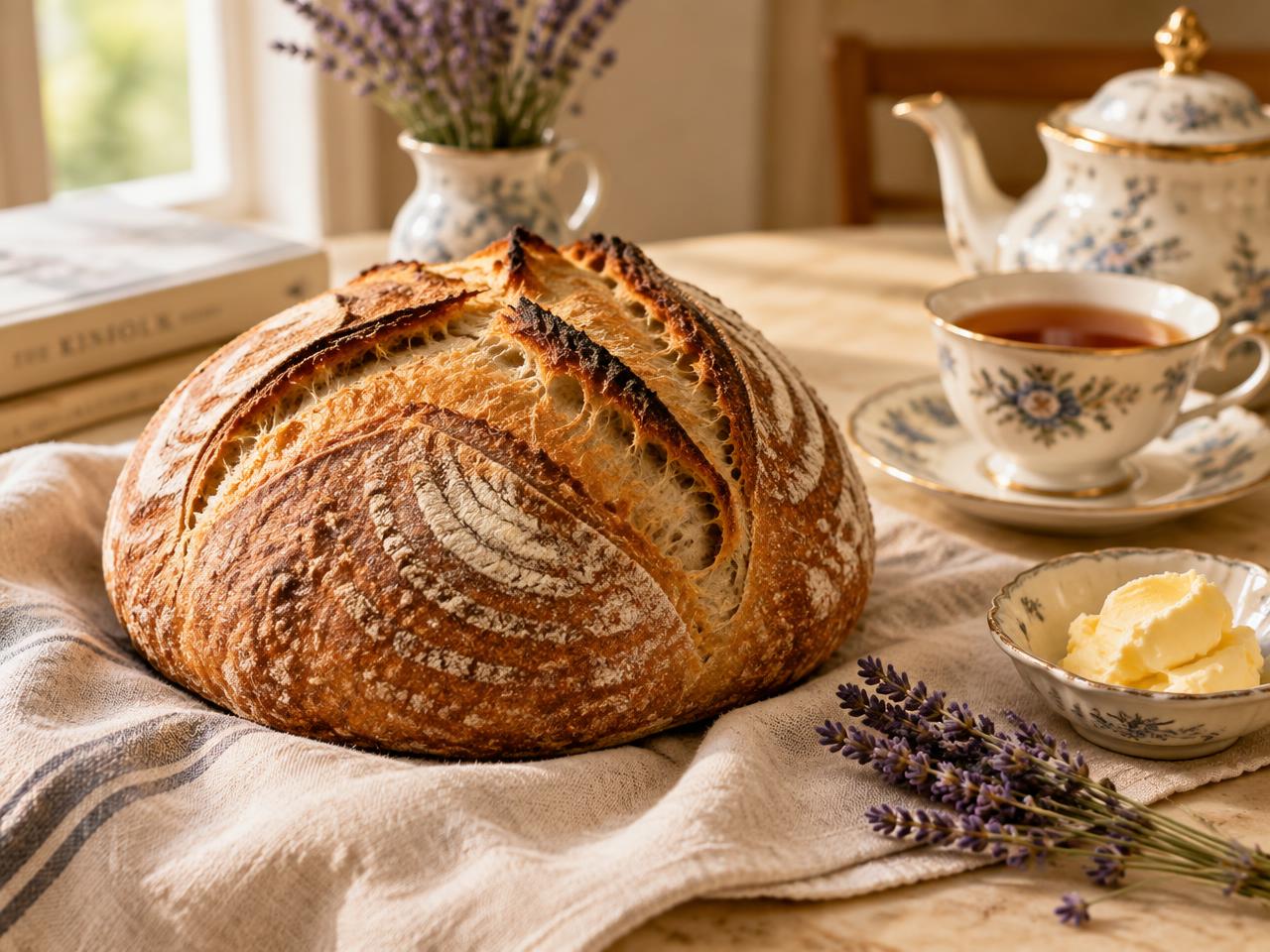
The biggest challenge with sourdough is patience and time. Sourdough is a living organism, and you cannot rush the process. Feed it, fold it, let it prove overnight — and it will reward you with a golden loaf and an open crumb.
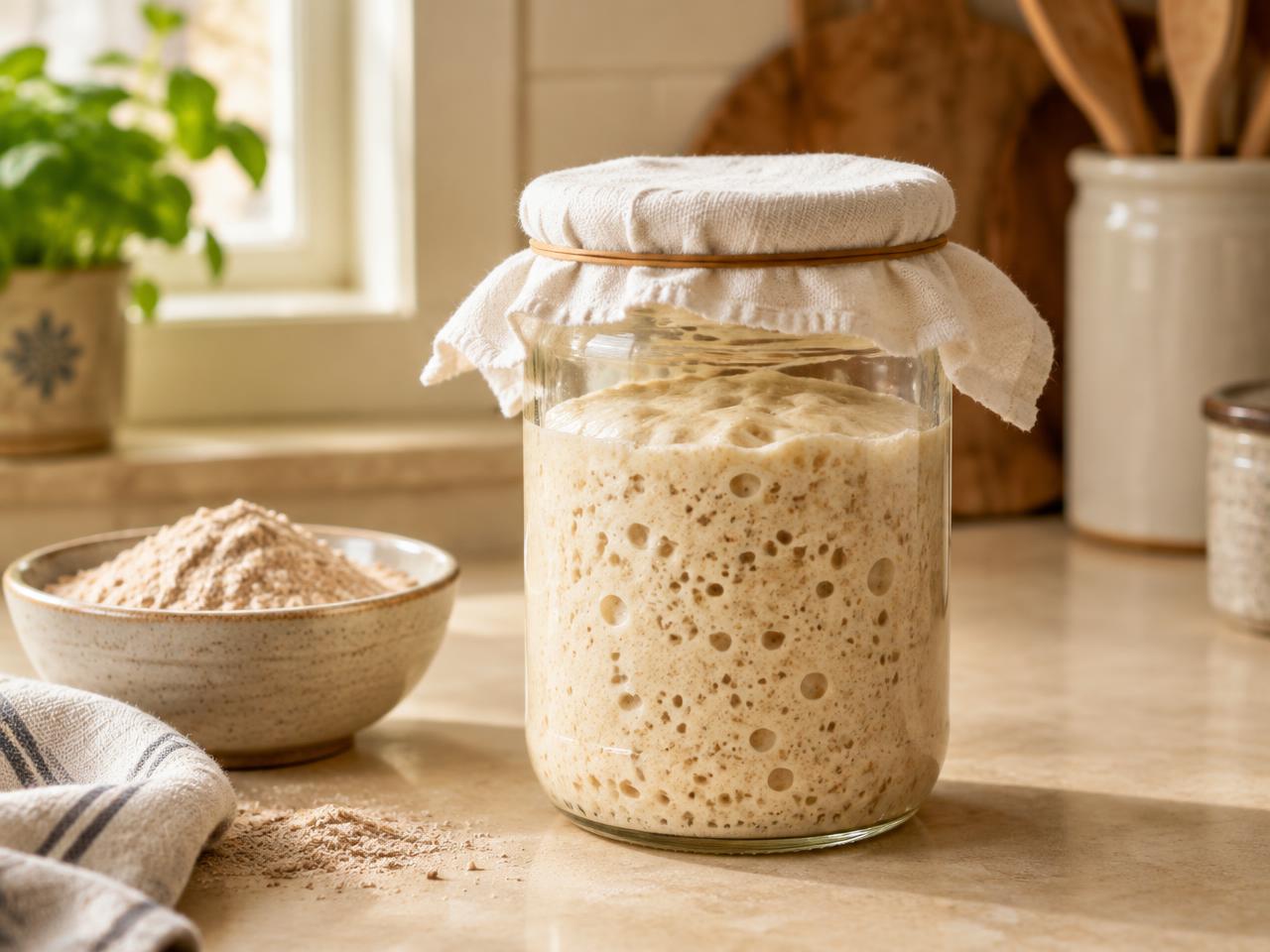
The starter — alive, bubbly and ready after about 7 days of feeding
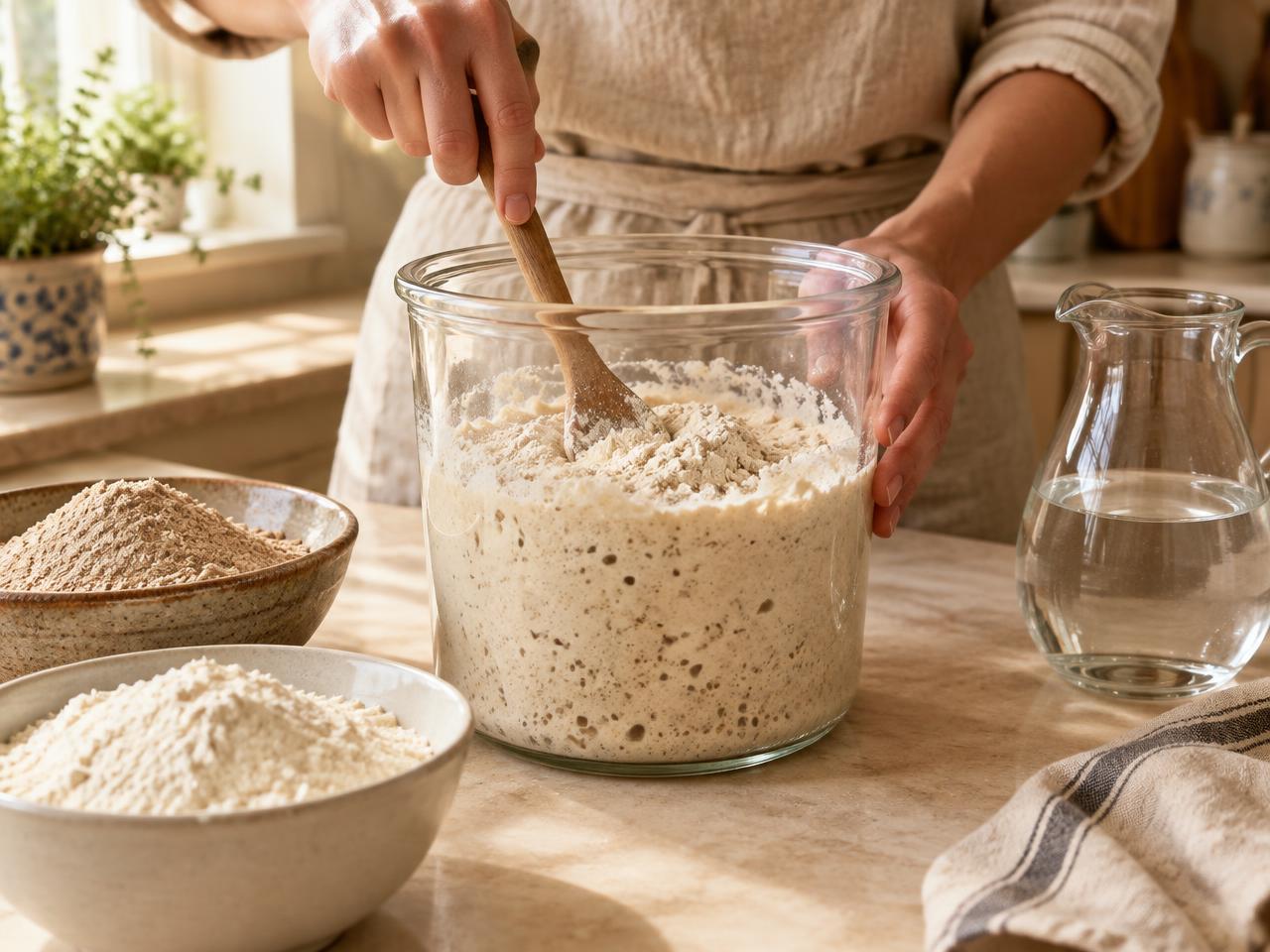
Feeding the starter daily: discard 200 g, then add 50 g wholewheat flour, 50 g white bread flour and 100 g water
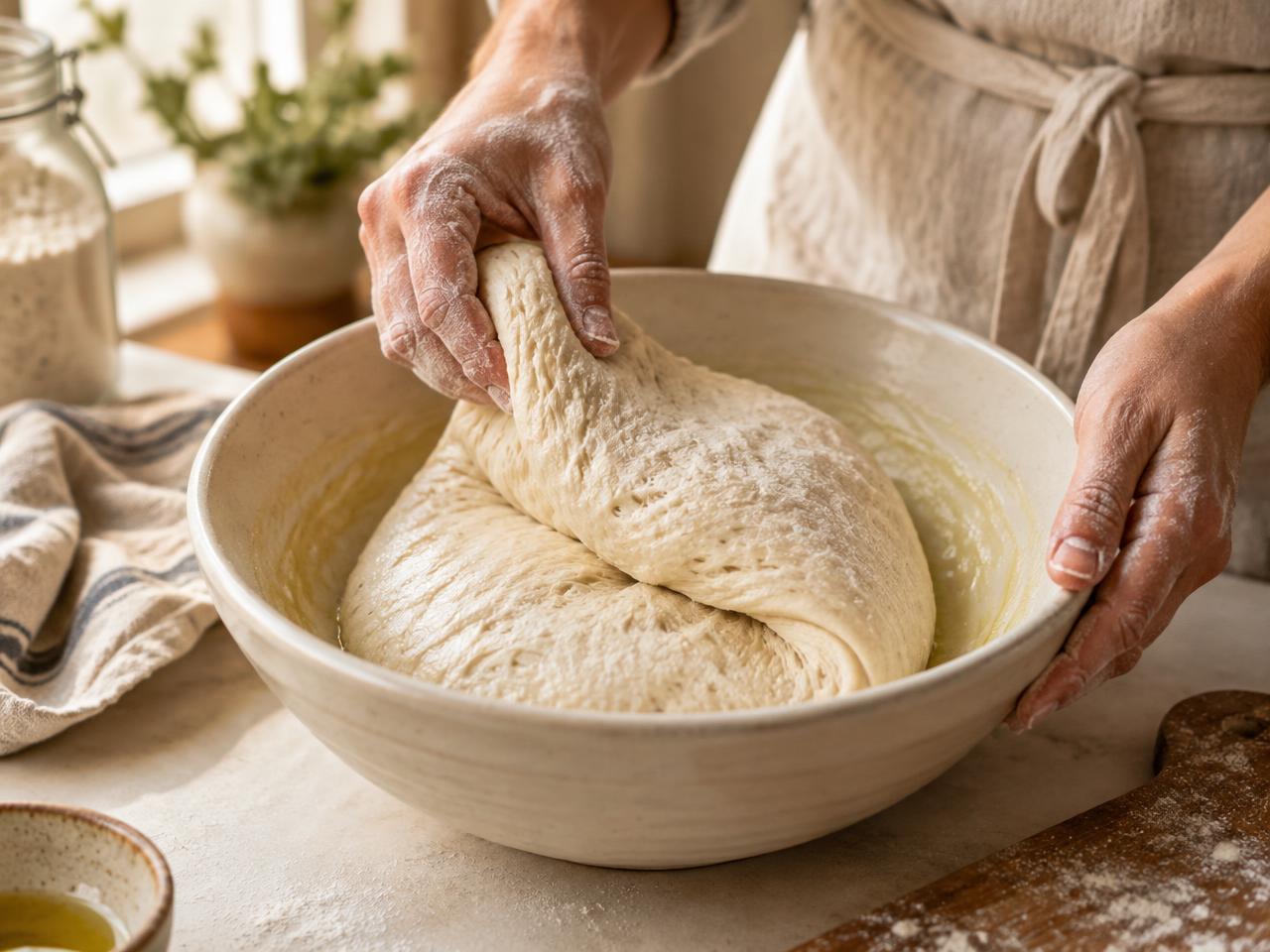
Folding the dough — pull up and fold towards you, on all 4 sides, 4–8 times at 30–60 minute intervals
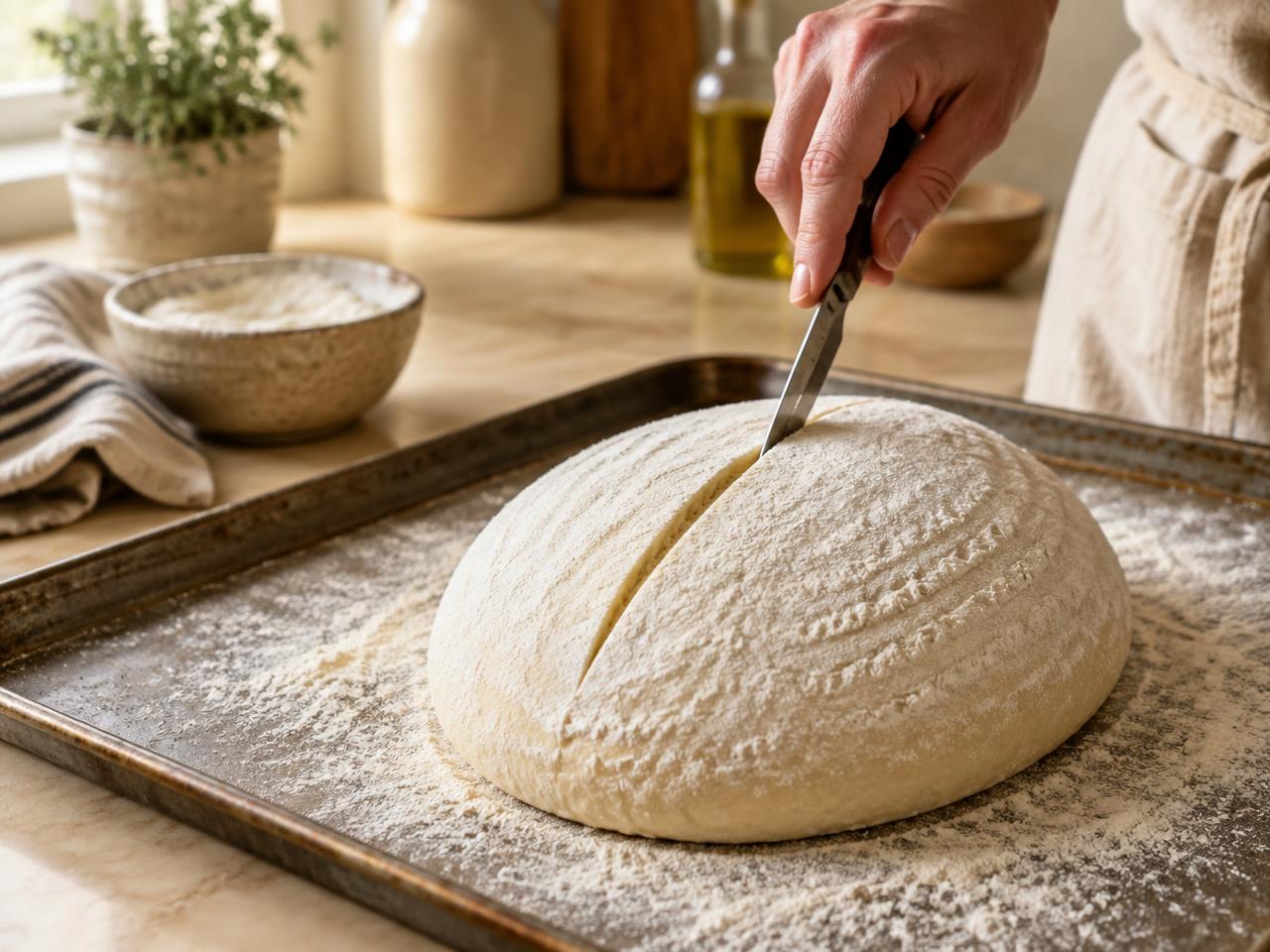
Scoring the dough's top with a very sharp knife, just before it goes into the oven
Method
- 01
Make the starter: combine 250 g wholewheat flour, 250 g white bread flour and 500 g water in a large container of your choice. Mix well to incorporate, and cover the container with a clean cloth and an elastic band to protect it from dust, while still allowing it to breathe.
- 02
To feed your starter daily, remove 200 g of the starter and discard, then add 50 g wholewheat flour, 50 g white bread flour and 100 g water to the container with the starter, and stir to combine well. Repeat the feeding process every day. It will take roughly about 7 days for the yeast to become adequately active.
- 03
To test if your starter is active, do the flotation test: place a tablespoon of your starter in a little water. If the starter sinks to the bottom, it is not yet active enough. If the starter floats on top of the water, though, it is active and ready to bake.
- 04
Make the dough: combine the wholewheat flour, white bread flour, the starter and 375 g water. Mix to a rustic dough. Place the dough in a bowl greased with a little oil.
- 05
Make a well in the top of the dough, and add the salt and 15 ml (1 T) water. Allow to rest 20 minutes. Then knead the salt into the rustic dough, 5–10 minutes, and return the now soft and elastic dough to the greased bowl. Cover with cling film and allow to rest at room temperature, roughly 30 minutes, before the first fold.
- 06
Fold the dough: pull the dough up and then fold it towards you. This needs to happen with all 4 sides of the dough. Aim to fold your dough roughly between 4–8 times, within 30–60 minute intervals.
- 07
Shape the dough on a flour-dusted surface. For an elongated shape, flatten your dough and bring one side to the centre, repeating with the 3 remaining sides. Then start folding the dough from the furthest side, all the way towards you, repeating with the 3 remaining sides. Fold your dough halfway over and pinch tightly. Fold it over halfway again and pinch so it does not slip. Repeat until your entire piece of dough has been tightened and formed into a nice long shape. Place the shaped dough in a slot of an industrial kitchen cutlery tray or rectangular container of 27 cm long × 11 cm wide × 10 cm deep lined with a cornflour-dusted cloth.
- 08
For a boule (round bread), simply tighten your dough into a ball and place it in a bowl lined with a cornflour-dusted cloth, with the seam of the dough facing upwards. This is both for aesthetic effect, as well as easing the bread out of the basket after proving.
- 09
To prove, place the bread in a cool, dry place or in the fridge to ferment, overnight (at least 12 hours).
- 10
To bake your loaf, preheat the oven to 230°C. Preheat the baking tray in the oven, 20 minutes. Once ready to bake, carefully remove the hot tray from the oven, lightly dust with flour and gently turn the shaped dough out onto this surface (peel off the cornflour-dusted cloth).
- 11
Score the dough's top with a very sharp knife and place in the oven as quickly as possible. After baking for 10 minutes, lower the temperature to 220°C and continue baking, 25–30 minutes. The bread is ready once it is golden brown and it sounds hollow when tapped.
Keep cooking