Resources
Understanding FND.
A short, plain-language primer — written by someone who lives it, not a clinician. Always check anything serious with your own medical team.
Weekly online support
FND Together We Rise — join the conversation.
FND Together We Rise hosts weekly group support sessions online: Wednesdays at 18:30 and Fridays at 10:00 UK time. Message them on their Facebook page for more information.
Please remember: you are not alone.
1 in 6
neurology outpatients have a functional disorder
Real
symptoms — not imagined, not 'all in your head'
Treatable
with the right specialist team and time
Something that helped me
One picture. So many tentacles.
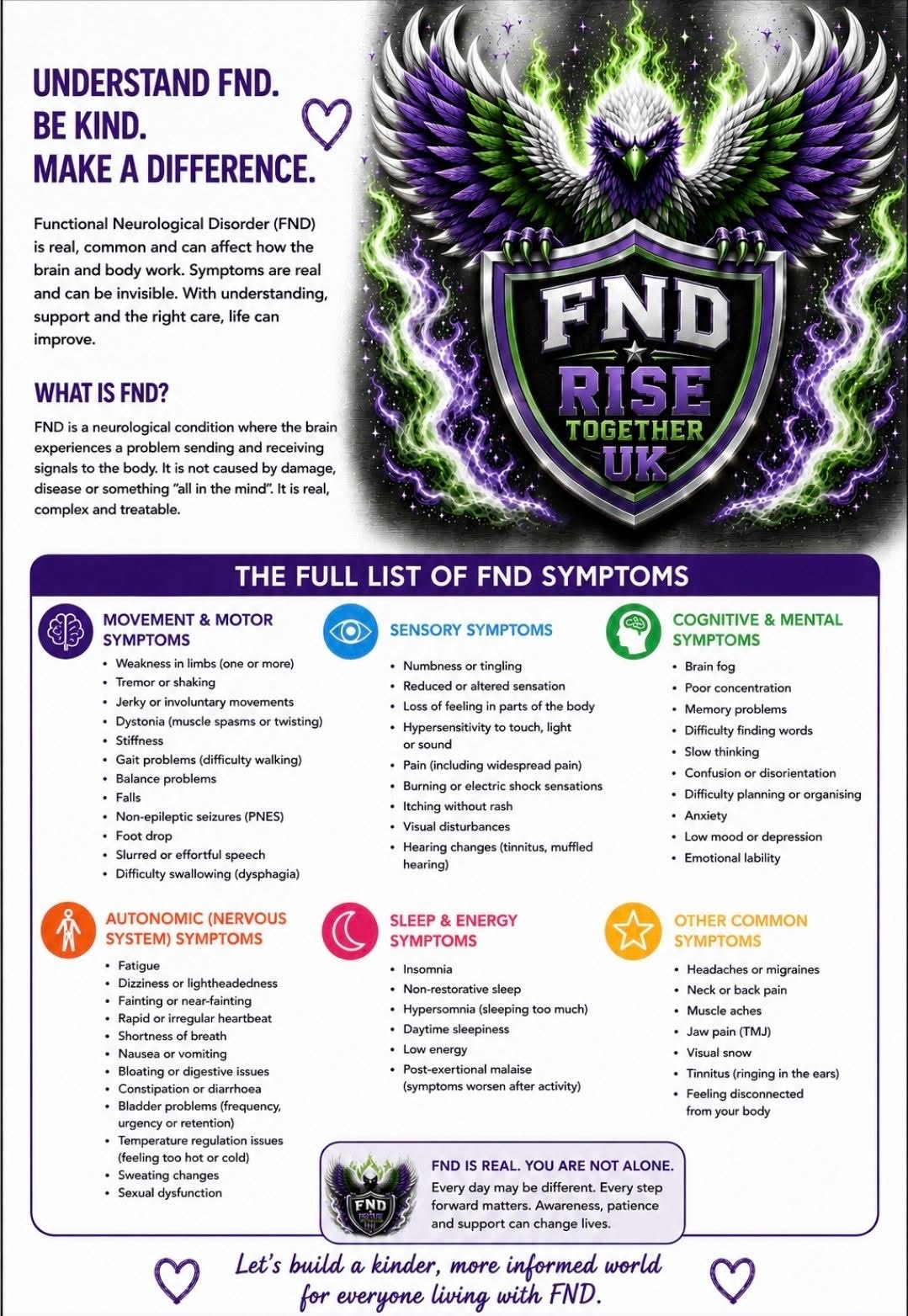
This one picture touches on so many of the tentacles of FND. I found it on Instagram and, on one page, in one image, it can save someone's life — someone who has not been heard, understood, or believed.
There is a lot more to FND than a single infographic can hold, but this is a beautiful start. It can give you an immediate jump from doubt to feeling heard. There is a big community of people advocating heavily for the "unheards" — those of us who were browbeaten into believing we were making symptoms up, sometimes even pitted against our own families.
This is something I have found profoundly helpful. I hope it helps you too. If you are reading this, may it bring you peace and a new path to finding support.
You are not making it up. You are not alone.
Chronic Illness Fact
Chronic illnesses and disabilities can be dynamic.
Someone who needed a mobility aid today might not need one tomorrow.
This is not a sign they're faking — it's just that their symptom severity is different that day.
— Bendy Bunny
This, exactly
From holding onto walls, to a walker, to racing a 90-year-old (and losing).
This is so true for me. I've gone from holding onto walls, to a walker, to walking so slowly a 90-year-old would beat me at a 100m dash. It's wild — and it's exactly what "dynamic" looks like from the inside.
Thank you to @millionsmissingvoices on Instagram for always shining a flashlight on this condition — factual, fair content that helps you recognise your own experience and reminds you that you are not alone.
There are wonderful humans on Instagram posting content that will make your journey feel less lonely. Good people are out there to help and guide you to a better sense of self-worth, and a feeling of knowing and belonging.
Shouting for the unheard
FND Today — a magazine for patients, families and professionals.
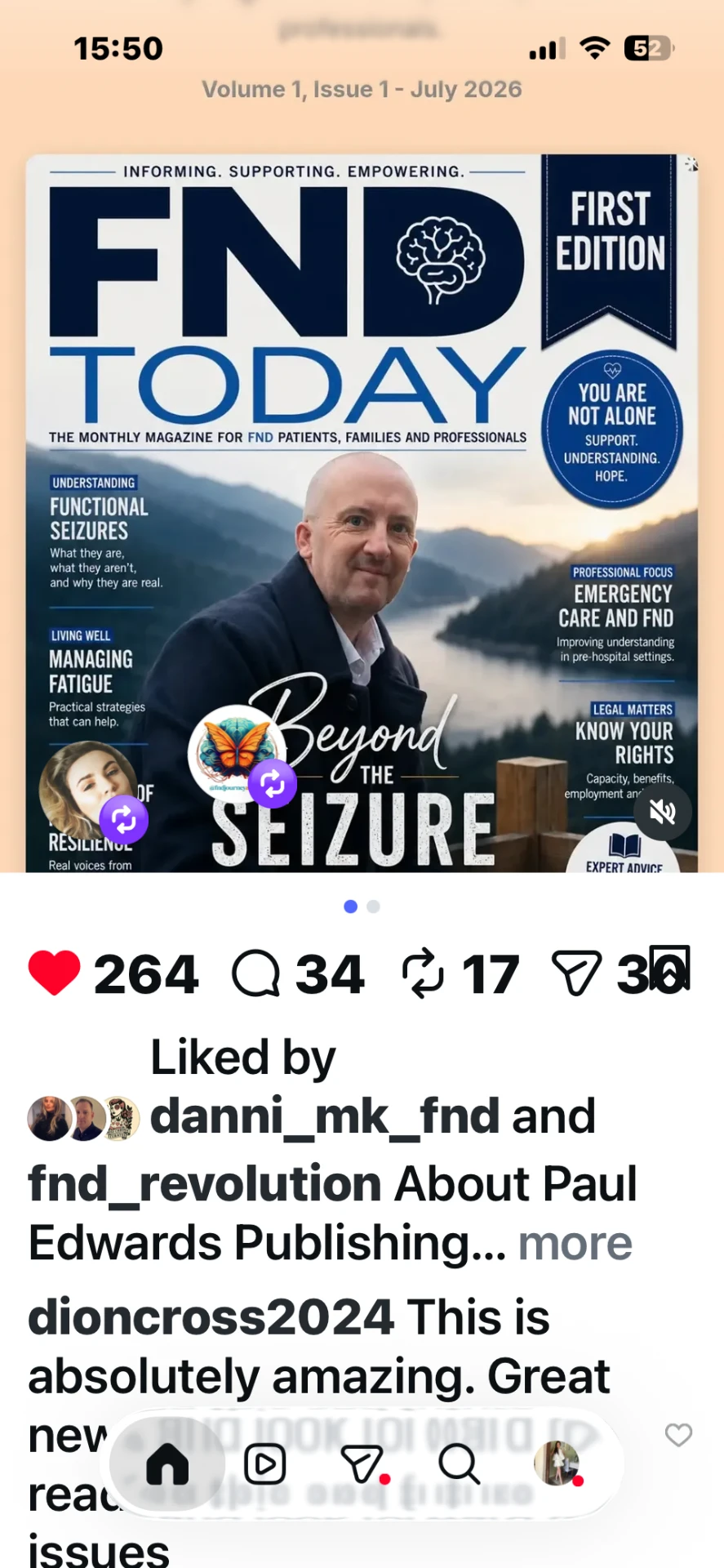
FND is extremely isolating, and it can steal your life if you let it. That is why the people shouting loudly for the unheard matter so much — they turn loneliness into community, and silence into understanding.
@fnd_revolution is one of those voices. She posted about the very first edition of FND Today, a monthly magazine published by Paul Edwards Publishing for FND patients, families and professionals.
The digital edition is now available to download — and it is free. The more people who read it, share it, and feel seen by it, the closer we get to a world where no one has to explain their condition in a whisper.
Lived experience is one of the most powerful teachers we have. Reading other people's stories helps us relate to the vulnerabilities and complications that come with FND every single day. You are not alone — and publications like this prove it.
Visit FND TodayWhen the oesophagus will not open
Achalasia — more than food feeling stuck.
Achalasia is distinct from globus, functional dysphagia, gastroparesis and SMA. It affects the oesophagus itself. These plain-language notes combine my lived experience with information from Mayo Clinic, with gratitude for making a rare condition easier to understand. This is not medical advice.
What is achalasia?
Achalasia is a rare swallowing disorder. The oesophagus loses its normal wave-like contractions and the lower oesophageal sphincter does not relax properly, so food and liquid struggle to pass into the stomach.
Food may remain in the oesophagus and come back up. That is different from GERD, where stomach contents flow back into the oesophagus.
Is it dysphagia or dysphasia?
Dysphagia means difficulty swallowing. Dysphasia means difficulty with language. Achalasia causes dysphagia — the frightening sensation of food or liquid sticking in the throat or chest.
How is achalasia diagnosed?
Oesophageal manometry is the key test. A thin pressure-sensitive tube passes through the nose into the oesophagus while small sips of water are swallowed. It measures whether the oesophageal muscles contract in sequence and whether the lower sphincter opens.
A barium swallow and upper endoscopy may also be used to watch how material moves and to rule out a physical blockage or another cause.
Can achalasia be cured?
There is no treatment that restores the damaged nerve and muscle function. Treatment aims to help the lower oesophageal sphincter open so food and drink can pass more easily.
Options can include pneumatic dilation, botulinum toxin injections, peroral endoscopic myotomy (POEM), or Heller myotomy surgery. The right choice depends on the person and must be discussed with a specialist.
How does this overlap with gastroparesis and SMA?
They affect different points in digestion. Achalasia obstructs movement from the oesophagus into the stomach. Gastroparesis delays emptying from the stomach. SMA compresses part of the duodenum beyond the stomach.
Their symptoms — nausea, vomiting, regurgitation, early fullness and weight loss — can overlap and compound one another. Having one does not explain away the others.
When is swallowing trouble an emergency?
Call emergency services immediately if you cannot breathe, speak or cough, if you turn blue or grey, if you cannot clear a blockage, or if you lose consciousness. In South Africa, call 112 from a mobile phone or 10177 for an ambulance.
Seek urgent medical care if you cannot swallow saliva, food remains stuck, you repeatedly vomit, or you have chest pain, blood, fever after choking, or signs of dehydration.
Release the Kraken
The monster in my throat — globus.
Definition
Globus (sometimes called globus sensation or globus pharyngeus, and often mispronounced "globulous") is the persistent feeling of a lump, tightness, or object stuck in the throat — even when nothing is physically there.
In FND, it becomes something bigger. The swallow itself misfires: the muscles that should move food down don't fire in sequence, the upper oesophageal sphincter doesn't relax on cue, and food can genuinely lodge — going down or coming back up.
Sources: Cleveland Clinic, Neurosymptoms.org.
This is FND's version of "release the Kraken." No joke. Food gets stuck in my throat — whether going down or coming back up — and despite every trick, every slow bite, every sip of water, I am still plagued by it.
I have pulled steak, bread, all sorts, out of my own throat. I have passed out because I couldn't breathe, hit my temple on the way down, bruised an arm, a hip. It is genuinely like being tumbled in a washing machine.
The FND implications: functional dysphagia (swallowing that fires out of sequence), a real choking and aspiration risk, weight loss and dehydration, dental damage from repeated regurgitation, and — quietly — the fear of eating in public that shrinks your world.
What has helped: small bites, upright posture, never eating alone if I can help it, speech-and-language therapy for swallow retraining, and — always — telling my team the truth about how bad a day it is. Please, if this is you: get assessed. Do not tough it out.
It is not in your head. It is in the wiring.
When food getting stuck becomes an emergency
Globus and functional dysphagia can escalate quickly. Please don't wait it out if any of the following happen — your airway and safety come first.
Call emergency services now
- You cannot breathe, speak, or cough.
- Your lips, face, or nails turn blue or grey.
- You are choking and cannot clear the blockage.
- You lose consciousness or pass out during an episode.
- Severe chest or throat pain with trouble swallowing saliva.
If you are alone: call emergency services first, then try to clear it. Do not drive yourself.
Seek urgent same-day care
- Food feels stuck for more than an hour and won't pass.
- You cannot swallow your own saliva or drool continuously.
- You are vomiting repeatedly after an episode.
- You notice blood in saliva or vomit.
- You have a fever after choking or aspirating.
Tell them you have FND and functional swallowing problems. It helps them take it seriously.
Practical safety notes: try to eat with someone nearby, take tiny bites, stay upright, and keep your phone within reach. A medical alert note in your phone or wallet — "FND with functional dysphagia / globus; risk of choking" — can save precious seconds in a crisis.
August is Gastroparesis Awareness Month
Gastroparesis — the reason I cannot hold food down.
When I went into hospital in August 2023, it was confirmed: my vagus nerve had crushed my stomach. The nerves around my stomach had simply stopped working. The nausea and vomiting were at an epic level.
Food also gets stuck just after my oesophagus — the opening won't open, then opens half way, and food lodges there too. What frustrated me most was doctors telling my family I was doing this to myself. Who on earth wants to be nauseous all day and vomit solids and liquids?
I had a feeding tube and the weight would not go up fast enough. Eventually, at 35kg, the surgeon said, let's go for it. Since the bypass, not much has changed. On a good day I'm only vomiting solids. On other days tea and liquids projectile out and I am left crestfallen.
Sharing this in case it helps someone feel less alone. Huge thanks to the friends I've found on Instagram who post such informed, honest content — particularly @paralysedwithlove and @millionsmissingvoices.
Invisible illness. Real pain. You are not alone.
Share your story
I learned so much about gastroparesis from @gastroparesisawareness2024 on Instagram. If you feel alone with this condition, there are so many of us now who can share and understand. Your story might be the one that helps someone else feel seen.
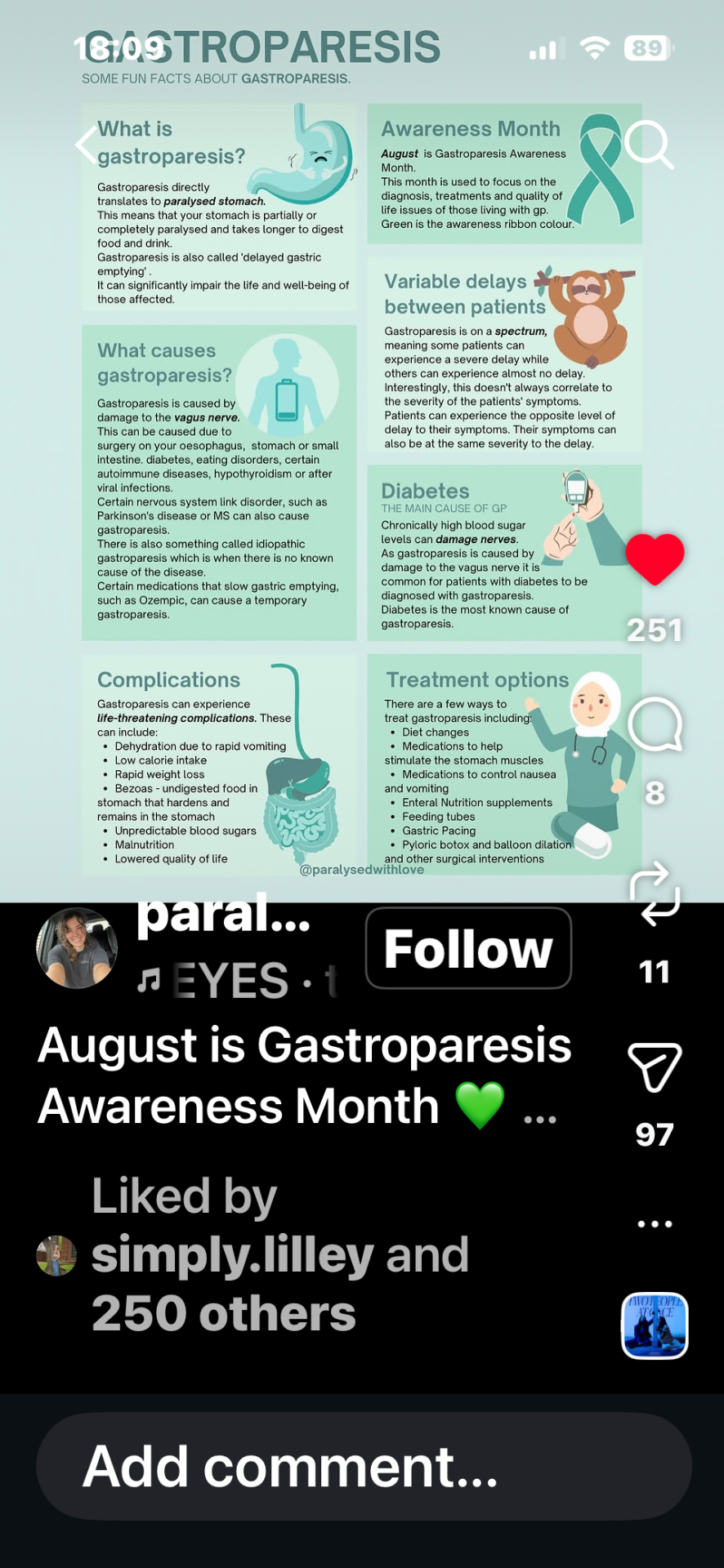
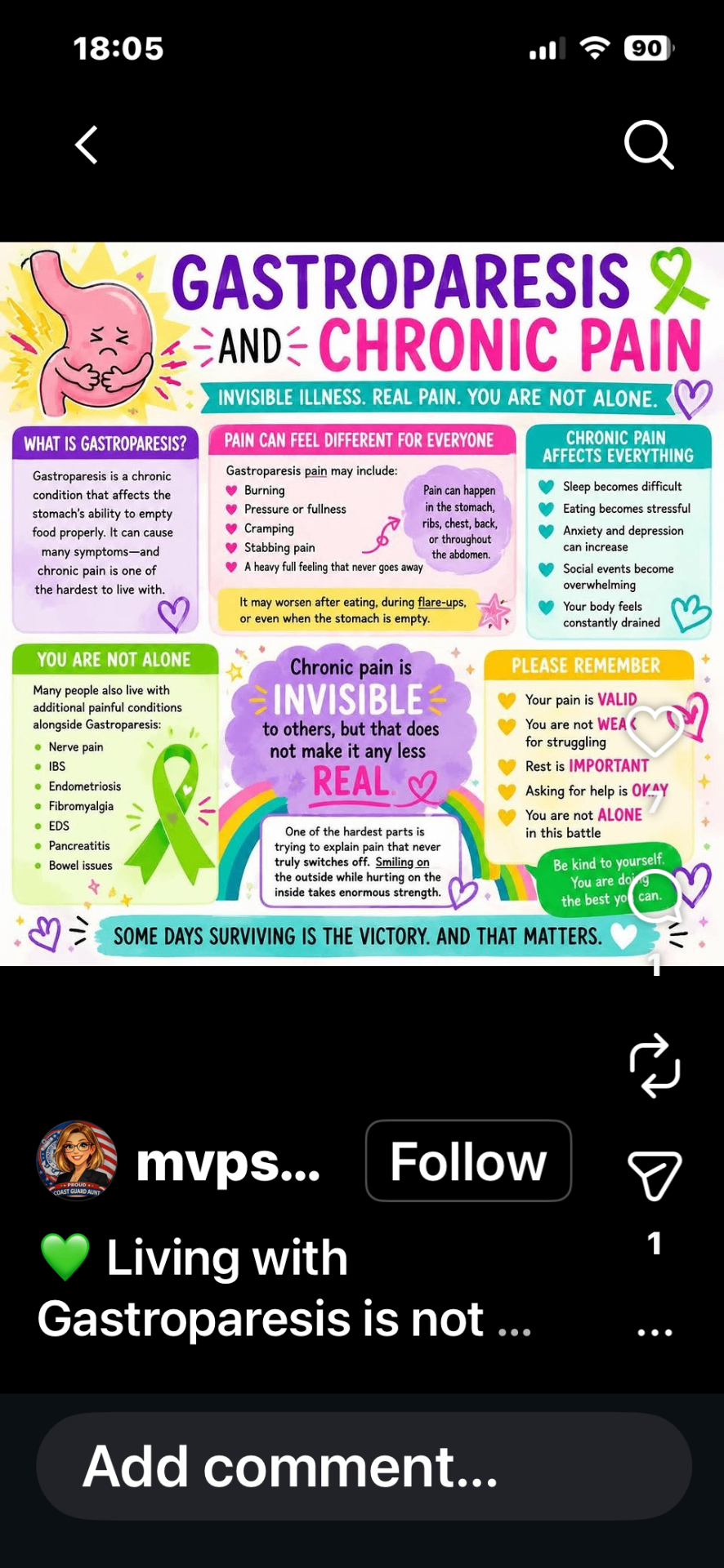
The picture that explained everything
The vagus nerve, the larynx, and why I cannot keep food down.
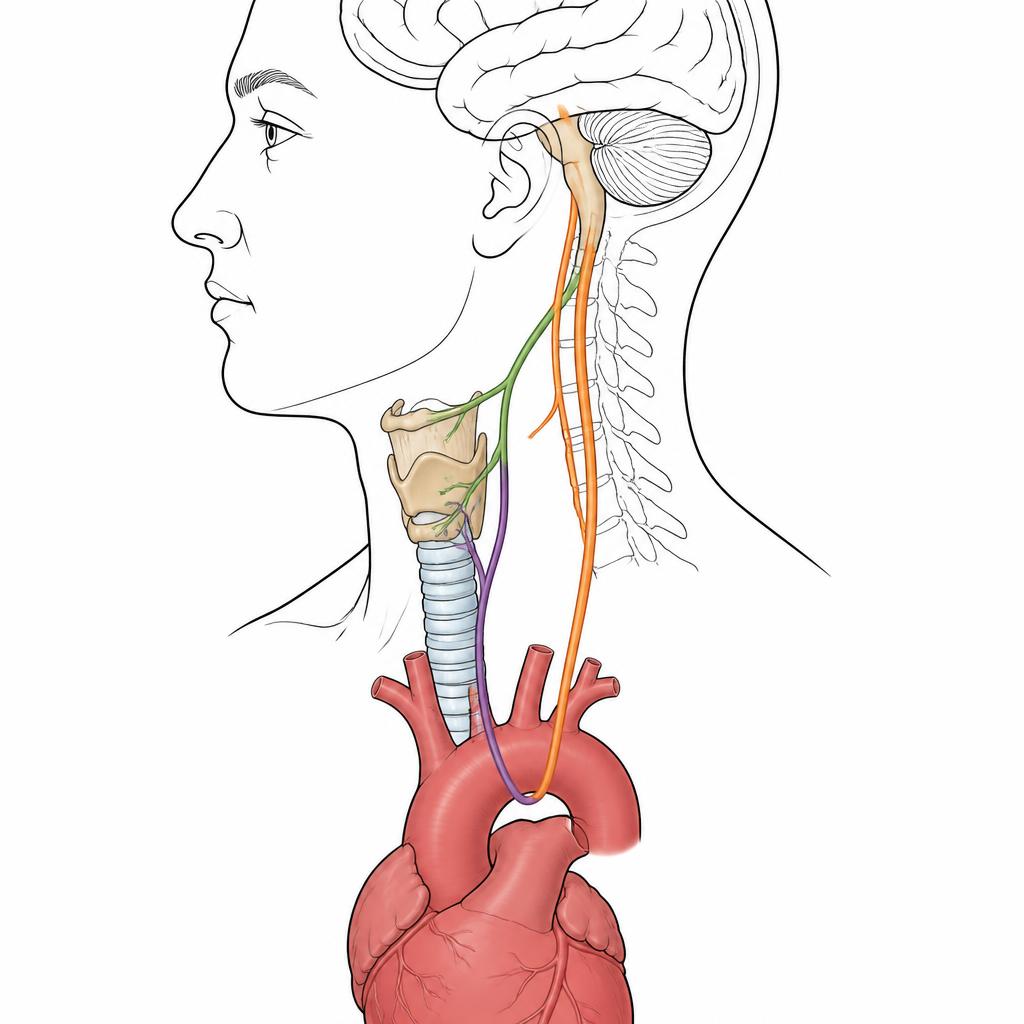
This is the one picture that made gastroparesis make absolute sense to me. This is what is wrong with me.
The vagus nerve runs from the brainstem all the way down the neck to the heart, lungs and stomach. It is the nerve that tells the stomach to squeeze and move food along. Mine collapsed onto my stomach, and the nerves there can no longer do their work. That damage will not recover. That is my gastroparesis — not a diet, not anxiety, not something I am doing to myself.
The superior laryngeal nerve branches off the vagus to the larynx. It carries the sensation that protects the airway and helps coordinate swallowing. Mine is no longer working. So food and liquid lodge in my throat, the swallow doesn't sequence properly, and the alarm system that should say stop, that went the wrong way is simply not firing.
Together, that is my daily fight: a stomach that cannot empty and a throat that cannot reliably swallow. Two failures on the same nerve tree.
And this is how we uncover what is wrong with us. Not because a doctor sat down and explained it — but because good people are working hard to release information as fast as they uncover it, so that those of us with rare and complicated disorders are heard and believed.
Do you know how long I was made to feel like I was making this up? I am angry and relieved, all at the same time.
This is my own understanding of my own anatomy and diagnosis, in plain language. It is not medical advice — please take any of it to your own team.
Gastroparesis FAQ
The questions people are often too shy to ask.
Plain-language answers from lived experience — not medical advice. Please talk to your own team about your own care.
What does gastroparesis actually feel like?
'Gastroparesis' literally means paralysed stomach. Food and liquid sit there instead of moving on, so you feel full after two bites, bloated, nauseous, and often in real pain.
For me it's constant nausea, vomiting solids on a good day and liquids on a bad one, and a heavy, stuck feeling just below the breastbone where food gets trapped after the oesophagus.
What are the most common symptoms?
Nausea, vomiting (often hours after eating), early fullness, bloating, upper-abdominal pain, heartburn, weight loss, and unpredictable blood sugars.
Symptoms fluctuate wildly — a 'good' meal one day can be a disaster the next, with no obvious reason.
How is it diagnosed?
The gold-standard test is a gastric emptying study: you eat a small labelled meal and a scanner tracks how quickly it leaves your stomach over a few hours.
Doctors will usually also do an endoscopy (a camera down into the stomach) to rule out a blockage, and blood work to check for causes like diabetes or thyroid issues.
What causes it?
Damage to the vagus nerve, which tells your stomach muscles to squeeze. Diabetes is the most common cause. Others include surgery near the stomach, viral infections, autoimmune conditions, neurological disorders (including FND for some of us), and sometimes no identifiable cause at all — 'idiopathic'.
Is being told 'you're doing this to yourself' true?
No. Absolutely not. Nobody chooses to vomit all day. Being dismissed like this is one of the most painful parts of the journey, and it delays proper care. If a clinician says this to you, please seek a second opinion from a gastroenterologist familiar with motility disorders.
Why a feeding tube?
When you can't keep enough food or fluid down, a feeding tube delivers nutrition directly into the gut so your body can be fed while your stomach rests. There are different types — nasojejunal (through the nose, past the stomach), PEG (into the stomach through the abdominal wall) and PEG-J or jejunostomy (into the small intestine).
It is not a failure — it's a bridge that keeps you alive and gives your team room to work.
What does the 'bypass' surgery do?
When medications and diet don't hold and weight keeps falling, surgeons can reroute food past the paralysed stomach so it goes straight into the small intestine. It's often life-saving.
Honestly? For me, it hasn't been a magic fix. On good days I only vomit solids; on bad days liquids still come straight back up. It bought me time and weight, and I'm grateful — but it isn't a cure, and it's important to go in with realistic expectations.
What other treatments exist?
Small, low-fat, low-fibre meals eaten often. Prokinetic medications (like domperidone or metoclopramide) to help the stomach empty. Anti-nausea medications. Botox or balloon dilation of the pyloric valve. Gastric pacemakers. Enteral nutrition (feeding tubes) and, as a last resort, surgical bypass.
Most people end up on a mix — there's no single fix, and what works can change over time.
How do I look after myself day-to-day?
Small sips and small bites, sitting upright for a while after eating, gentle walking when you can, and keeping a symptom/food diary so patterns become visible.
And — very seriously — a community. Following people like @paralysedwithlove and @millionsmissingvoices reminded me I wasn't alone, and that mattered as much as any medication.
When should I go to hospital?
Signs of dehydration (dark urine, dizziness, not passing urine), inability to keep fluids down for more than 24 hours, uncontrolled vomiting, severe abdominal pain, fever, black or bloody vomit, or rapid weight loss. Please don't tough these out — go in.
A new diagnosis
Superior Mesenteric Artery Syndrome — SMA.
In August 2026 I was diagnosed with SMA: a rare compression of the duodenum between the aorta and the superior mesenteric artery. It is structural, it is serious, and it is now part of my forever. These answers are from my own reading and experience — please verify everything with your own specialists.
What is Superior Mesenteric Artery Syndrome (SMA)?
SMA is a rare compression disorder where the third part of the duodenum (the first section of the small intestine) gets pinched between the aorta and the superior mesenteric artery. This narrows or blocks the passage of food and liquid from the stomach into the rest of the gut.
It is also known as Wilkie's syndrome, aortomesenteric compression, or cast syndrome. It is considered extremely rare, though some specialists believe it is underdiagnosed.
What are the symptoms?
The classic symptoms are severe nausea, vomiting (often of bile or recently eaten food), bloating, upper abdominal pain, early fullness, and weight loss. Symptoms usually worsen after eating or drinking and can be relieved by lying on the left side or in the knee-chest position.
Because the duodenum is compressed, food and liquid can't move through easily, so people often feel full after only a few bites and may vomit hours later.
How is it diagnosed?
SMA is usually diagnosed with imaging — most commonly a CT scan or MRI with contrast, which can measure the aortomesenteric angle and the distance between the aorta and the superior mesenteric artery. A normal angle is usually 38–65 degrees; in SMA it is often much smaller.
Doctors may also do an upper GI series (barium swallow/X-ray) to watch contrast move through the duodenum, and endoscopy to rule out other causes. Because it is rare, it is often misdiagnosed as gastroparesis, an eating disorder, or functional vomiting.
Is it related to FND or gastroparesis?
SMA is a structural compression problem, not a functional neurological one. However, people with complex neurological and motility histories can have more than one condition, and symptoms overlap heavily with gastroparesis and functional vomiting.
If you have FND and severe, persistent upper-GI symptoms that don't quite fit one diagnosis, it is worth asking a motility specialist whether SMA has been ruled out with proper imaging.
What treatments exist?
Treatment depends on severity. First-line care often includes nutritional support (liquid feeds, nasojejunal or jejunostomy feeding), posture changes, and medications to reduce vomiting. Some people improve with weight restoration if the compression is related to low body weight.
If conservative treatment fails, surgery can relieve the compression. The most common operation is a duodenojejunostomy, which bypasses the compressed duodenal segment. It is major surgery and not a guaranteed cure, but it can be life-saving for severe cases.
When should I seek urgent help?
Go to emergency care if you cannot keep any fluids down, you are vomiting repeatedly, you have signs of dehydration (dark urine, dizziness, not passing urine), severe abdominal pain, black or bloody vomit, or rapid weight loss. SMA can lead to malnutrition and dehydration quickly, so early intervention matters.
The molotov cocktail
My autoimmune conditions, and medically induced liver failure.
Autoimmune diseases are conditions where the body's immune system mistakenly attacks its own cells, affecting a range of organs and systems. I live with Sjögren's syndrome, antiphospholipid syndrome, lupus and scleroderma — then add FND and drug-induced liver failure on top. Here is what each one actually is, in plain language. This is my own understanding, not medical advice.
What does autoimmune actually mean?
An autoimmune disease is one where the immune system — the part of you that is meant to fight infection — mistakenly identifies your own tissue as the enemy and attacks it. Depending on which tissue it targets, you get a different diagnosis: glands, blood vessels, joints, skin, kidneys, lungs, the nervous system.
It is entirely possible to have several at once. Overlapping autoimmune conditions are common, and each one adds its own symptoms and its own risks. On top of that, many of us have persistently low white blood cell counts — the very cells that fight infection — either from the disease itself or from the medication used to calm it down. That is why an ordinary flu is not ordinary for me.
Sjögren's syndrome
Sjögren's is an autoimmune condition that attacks the moisture-producing glands — mainly the tear glands and the salivary glands. The classic symptoms are severe dry eyes (gritty, burning, light-sensitive) and dry mouth, which brings difficulty swallowing, dental decay and mouth infections.
It is far more than dryness, though. Sjögren's causes profound fatigue, joint and muscle pain, dry skin, vaginal dryness, and it can involve the kidneys, lungs, liver and nerves. It is diagnosed through blood antibodies (anti-Ro/SSA and anti-La/SSB), tear-flow tests and sometimes a lip gland biopsy. Treatment manages symptoms — artificial tears and saliva, hydroxychloroquine, and careful dental care.
Antiphospholipid syndrome (APS)
APS, sometimes called Hughes syndrome or 'sticky blood', is an autoimmune clotting disorder. The immune system makes antibodies against phospholipid-binding proteins in the blood, which makes the blood far more likely to clot than it should.
That means a raised risk of deep vein thrombosis, pulmonary embolism, stroke and heart attack, often at a young age. It is also one of the leading treatable causes of recurrent miscarriage and pregnancy loss, because clots form in the tiny vessels of the placenta. Other signs include migraines, a lacy purple mottling of the skin called livedo reticularis, and low platelets.
It is diagnosed with blood tests (lupus anticoagulant, anticardiolipin and anti-beta-2-glycoprotein I antibodies) repeated at least twelve weeks apart. Treatment is anticoagulation — low-dose aspirin, heparin, or warfarin — for life in most people who have already clotted.
Lupus (systemic lupus erythematosus, SLE)
Lupus is a systemic autoimmune disease that can inflame almost any organ: skin, joints, kidneys, heart, lungs, blood cells and brain. It runs in flares and remissions, so you can look well one week and be floored the next.
Common features are the butterfly rash across the cheeks and nose, photosensitivity, mouth ulcers, joint pain and swelling, hair loss, fevers, pleurisy, kidney inflammation (lupus nephritis), and low blood counts — including low white cells, which is one of the diagnostic criteria and one of the reasons infection is genuinely dangerous.
Diagnosis rests on the pattern of symptoms plus blood tests: ANA, anti-dsDNA, anti-Smith, complement levels, kidney function and urine testing. Treatment usually includes hydroxychloroquine, steroids during flares, and immunosuppressants — which lower immunity further, a permanent trade-off.
Scleroderma (systemic sclerosis)
Scleroderma means 'hard skin'. It is an autoimmune connective-tissue disease in which the body overproduces collagen, so tissue thickens, tightens and scars. Localised scleroderma affects patches of skin; systemic sclerosis affects internal organs as well.
Typical features are tight, shiny, hardened skin (often starting on the fingers and face), Raynaud's phenomenon where fingers turn white then blue in the cold, painful digital ulcers, joint contractures, reflux and swallowing problems as the oesophagus stiffens, slowed gut motility, lung fibrosis and pulmonary hypertension.
Diagnosis uses examination, antibodies (anti-centromere, anti-Scl-70/topoisomerase, anti-RNA polymerase III), nailfold capillaroscopy, lung function tests and imaging. There is no cure; treatment targets each organ — vasodilators for Raynaud's, proton-pump inhibitors for reflux, immunosuppressants for lung involvement.
Medically induced liver failure — what it is and why it changes everything
Drug-induced liver injury (DILI) happens when medication damages liver cells. It can be dose-related and predictable, or idiosyncratic — an unpredictable reaction in a susceptible person. When the damage is severe or sustained enough, liver function fails: the organ can no longer clear toxins, make clotting factors and albumin, or metabolise medication properly.
Signs include jaundice, dark urine, pale stools, itching, nausea, right-sided abdominal pain, easy bruising and bleeding, fluid in the abdomen, and confusion (hepatic encephalopathy) in advanced cases. Blood tests show raised ALT, AST, ALP and bilirubin, and a prolonged INR when synthetic function drops.
The practical consequence is enormous: almost every drug is processed by the liver, so a failing liver narrows the list of things I can safely take to almost nothing. Most antibiotics, paracetamol at normal doses, many antifungals, statins and standard painkillers become risky or off-limits. Alcohol is out entirely. Treatment is withdrawal of the offending drug, supportive care, and monitoring — the liver can regenerate, but only if it is not hit again.
Why an ordinary flu is not ordinary for me
Put them together and it is a molotov cocktail. The autoimmune conditions and their treatments keep my white blood cells low, so an infection that most people shrug off can take hold and spread. Scleroderma and lupus can both involve the lungs, so a chest infection has less reserve to work with. APS raises clotting risk, and infection and immobility raise it further. Liver failure removes most of the medicines that would normally treat any of this — antibiotics included. And FND amplifies everything: fever, dehydration and exhaustion are classic triggers for a symptom flare or functional seizures.
This is why staying home is not antisocial and not paranoia. It is infection control. If you love someone in this position, the kindest thing you can do is not visit while you are ill.
Red flags that mean go in, no arguing: breathlessness at rest, chest pain, blue lips, a fever that will not come down, coughing up blood, confusion, not being able to keep fluids down, or a new one-sided leg swelling. None of this is medical advice — it is my own experience alongside my specialists.
What FND is.
Functional Neurological Disorder is a problem with how the brain sends and receives signals — the 'software', not the 'hardware'. The brain itself looks structurally normal on scans, yet symptoms are very real and can be disabling.
Common symptoms.
Weakness, tremor, walking difficulties, non-epileptic seizures, sensory changes, fatigue, speech changes, and — one of the core pillars — brain fog. For some, FND also brings gastroparesis, dystonia, dysphasia, and severe sensory sensitivities that require careful desensitisation. Symptoms vary day to day and can be triggered by stress, illness or simply nothing identifiable at all.
Brain fog — a pillar of FND.
Brain fog isn't 'a bit forgetful'. It's reading the same recipe 500 times and retaining none of it. It's forgetting how to spell a word you've known since you were four. It's numb, wordless frustration when the language you built a life on suddenly won't come. It is real, it is common in FND, and — with a patient team, rest, and time — it can improve. I know, because mine has.
What helps.
A clear diagnosis from a neurologist who knows FND. Specialist physiotherapy or occupational therapy. Cognitive behavioural therapy where appropriate. Pacing, sleep, gentle movement, and a community who understands.
What doesn't help.
Being told it's 'just anxiety'. Pushing through until you collapse. Comparing your week-to-week. The internet at 2am. (I've done all of these — none of them are the answer.)
Why I share this
"Whoever saves one life, saves the world entire."
If my story reaches just one person, then I have achieved everything. I know exactly how lost I felt — and knowing, and learning from, others who live with this condition saved my life. If that can be true for you too, then this page has done its work.
Find your people
FND Together As One — a safe place for anyone affected by FND.

If you need support and information beyond what I share in my journal and journey, this is a wonderful source for help and guidance. FND Together As One is a warm, welcoming Discord community for people living with FND, as well as family, friends, carers and supporters.
It is a judgment-free space to talk, vent, share wins and struggles, find resources, and connect with people who truly understand. There is real strength in knowing you are not alone — and this community lives that out every single day.
Thank you to FND Together As One for creating a place where so many of us can find support, understanding and hope.
Join FND Together As One on DiscordThank you
The loudest voices for a silent chronic illness.
If you have FND, or you love someone who does, these accounts are so helpful. They explain what I have struggled for years to put into words, and they give you the grace you need to come to terms with FND. Some of them also carry the gastroparesis information that has helped me explain the thing that cripples me most. Thank you to every one of them.
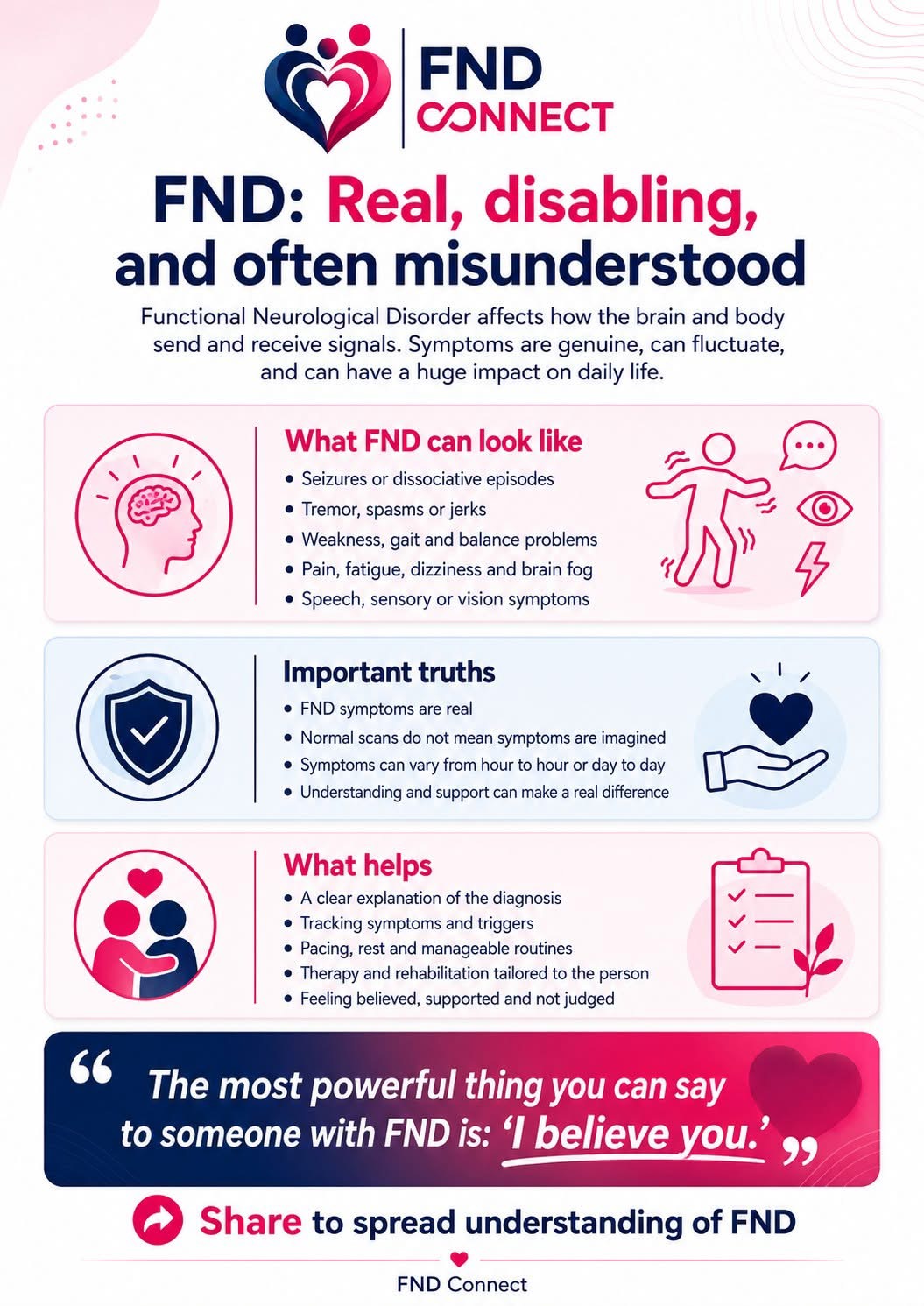
- @FNDConnect
Facebook · Clear, kind explainers on what FND looks like and what actually helps.
- @millionsmissingvoices
Instagram · Words for the grief that comes with chronic illness.
- @gastroparesisaware
Instagram · Explaining gastroparesis to family and friends — the illness that cripples me.
- @FND_Revolution
Instagram · Advocacy, awareness and a refusal to be dismissed.
- @yourfndadvocate
Instagram · Practical advocacy for navigating appointments and diagnosis.
- @FNDfighter
Instagram · The neurology behind FND pain and paralysis, in language you can hold onto.
"How did you survive it? I let my heart break instead of pretending it hadn't."
Why FND causes pain
Pain is produced by the brain and nervous system, not only by injured tissue. In FND the way the brain processes, predicts and regulates sensation is altered, so ordinary signals can be felt as painful or threatening. The pain is real. — @FNDfighter
Why movement fails
Movement networks — motor cortex, supplementary motor area, basal ganglia and cerebellum — become poorly synchronised. The interruption happens before the signal reaches the muscle, which is why weakness is genuine despite normal scans. — @FNDfighter
Explaining gastroparesis
My stomach doesn't empty properly. What I can eat changes day to day. Pressuring me to eat makes it worse. The best thing you can do is believe me. — @gastroparesisawareness2024
Further reading
Trusted places to learn more.
This page is shared from personal experience and is not medical advice. Please speak with a qualified clinician about your own care.