Chapter one
My FND journey.
This is the long version of an answer I'm often asked. Take what's useful, leave what isn't, and please be gentle with your own story too.
01
Before
When something was wrong but no one could say what.
Tingling that travelled. Legs that buckled. Words that arrived a beat late. I learned the inside of A&E waiting rooms and the careful faces of doctors who wanted to help but had to rule things out first.
02
Diagnosis
The day FND finally had a name.
Functional Neurological Disorder — a glitch in the software, not the hardware. Real symptoms, real brain, treatable. I cried, and then I started reading.
03
Treatment
Building a toolkit, slowly.
Specialist physio, talking therapy, pacing, sleep, and the small daily rituals that anchor a wobbly nervous system. Some weeks I do all of it; some weeks I do none of it. Both are allowed.
04
Now
Living wide, not just long.
I still have bad days. I also have a kitchen, a wardrobe I love, a home that holds me, and a table I set for friends. FND is part of the story — not the whole sentence.
14 August 2026 · Faith
You are not the hand you were dealt — you are what you do with it.
Faith is most tested, and most required, in the unknown. That one line has held me all week.
I wish the strides I made and the decisions I came to had all worked out. They didn't. But when you find your path, you choose it every day — no matter how painful, no matter how frightening. Not everyone will agree with or understand why you did certain things. Once decided, own it.
You would think that would be harder with a chronic illness. It is the opposite. When you are all you have got, choosing yourself, owning your walk and carving out a future you can be proud of becomes simpler — because you only have enough strength for the internal battle of how good or bad the day has been. Everything else has to be clean.
Shoot for the stars. If you only reach the stratosphere, that is still something. It is still more than most people who live in fear and indecision ever get to. Your walk, the journey, the path — it is your own. You wear your own crown. You are the master of your fate.
A few years ago I gave in and lay very still on the couch, praying for the end. Since then there have been many days of walking unassisted, and weight going back on. So I have to believe better days are coming. This is not thinking out loud — this is screaming into the tornado that is FND and saying that I am not scared anymore.
FND is mental toughness against every odd. The deck is stacked, your rook is permanently under attack — but you know that. It is not an unknown. You know the rules; you just have to play smarter. And I refuse to grow old as the woman defined by her chronic illness alone. It is a significant part of me, it can define a day in the most endemic way, but if it is all I look at, I lose.
To thine own self be true. It has never meant more than it does now.
15 September 2026 · Determination
She saw more for me.
I was watching Jay Shetty's interview with Oprah and I cried — I felt her will and determination mirror my own. It reminded me of my grandmother, who raised me. She saw more for me. That I could do more, despite the horror of my childhood. She saw more for me, and that is why I questioned, why I reached, why I never settled for the version of me the world tried to hand back.
I look at a picture of my four-year-old self and I try to honour her — to do more for her. I knew I was different. That I wanted more. That no one and nothing defines me but me. Only I knew me.
I am the master of my fate. I am the captain of my soul. God, use me. May I always honour you, and thank you.
5 September 2026 · Grace
240 days, reset to 1.
240 days is not nothing. It is a significant number of days. And yet today it reset back to 1, and I feel the kind of joy that belongs to a baby given a rattle — something so small, but the significance makes the whole world feel alive again.
I spent yesterday debating the dichotomy of want versus need. I want so much of what others take for granted. I need so much more than most people will ever imagine. But the peace of mind that comes from knowing you are still loved, wanted, needed, heard and understood — despite significant disability — is a gift no one can take from you.
Then I read this: grace is where God meets you; faith is where you meet God. I nodded like a crazed parrot. Something clicked. I just got it. I have to work on deepening my faith and accepting the grace I am bestowed.
Which brings me to Elizabeth — Henry the Eighth's fierce, red-headed daughter, the daughter of Anne Boleyn. I have watched Cate Blanchett play her more times than I can count. There is a stubbornness in standing clear, head and shoulders above mere mortals, as if levitating. She is my kind of superhero: a star who history, beheadings and her father's lechery could not stop from dragging England, kicking and screaming, into better days.
Mary, the Queen of Scots, the French, the Spanish, the Catholic Church, and all the men who wanted to marry her off — they all circled. Yet she held her ground. If you remember nothing else from this page, remember the number: 240 days were reset back to 1. And all I can attribute it to is the grace. The grace.
Grace is where God meets you. Faith is where you meet God.
11 September 2026 · Gratitude
Broken, but grateful.
God, I am grateful. Thank you.
I am broken. I am tired. Some days the body feels like a house with too many doors left open, and the wind blows through all of them at once. And yet — I am loved. Immensely loved. I did not foresee the grace accorded to me, and that is what makes it grace: it arrives unearned, unexpected, and completely overwhelming.
There is a peculiar mercy in being held together by love when you feel most fractured. People see the heels and the lipstick and the laughter, but the real miracle is the quiet, stubborn gratitude underneath it all. The choice to say thank you even when the night was long. Even when the pain was loud. Even when I did not see the light coming.
So this is my prayer and my protest in the same breath: broken, but grateful. GRATEFUL. Because grace does not require wholeness. It simply meets you where you are, shattered bits and all, and says, "Still mine. Still here. Still enough."
Broken, but grateful.
4 August 2026 · The truth
What was, and what will never be.
Sometimes you live with regret. You mourn. You mourn the loss of your past abilities. You mourn the future you thought you would have. You mourn the lies, the untruths, the mistreatment, the misrepresentation — the fact that you were not believed, and that through it your family was led to believe you were somehow making things up, lying about your symptoms.
And then there are your own choices. The fact that you start to believe that you are the problem. That you are a burden. Their number one problem and regret. You fall for lies. You hold on too tight to possibilities. You stop trusting yourself and your gut, and through it all you watch yourself deteriorate, and you hate yourself. Because somehow it must be your fault, right? How can it not be your fault? How can it not be something you are making up? And so you hate your very own existence.
Then people make you feel worse. So much worse. And you want it all to end. You want the earth to suck you up, to suck you in, to take you — because dear God, what else is there to live for. And diagnosis after diagnosis, you get blamed for everything. Every misstep, every fall, every problem created. It is all because of you.
Even the number of miscarriages. Of which I had twenty-four. Yes — 24. So no, my life has never been a picnic. It has never been easy, and I am the one who had to pick myself up, play-act that things are okay, that somehow life goes on. I am the one who had to accept that I would never be a mother, a sister, a grandmother, an anything.
And so, in the end, you are nothing. Your existence is for nothing. Your fight is your own, your life is singular, and your memory fades. You will not be remembered. Your accomplishments get consumed by the fact that you have always been sick. And that stinks. There is no real happiness. That is the ugly truth.
You are not alone — but at the core of it, you are alone. No one can save you. This is the fight of your life. YOUR LIFE.
3 August 2026
One year into the best day of my life.
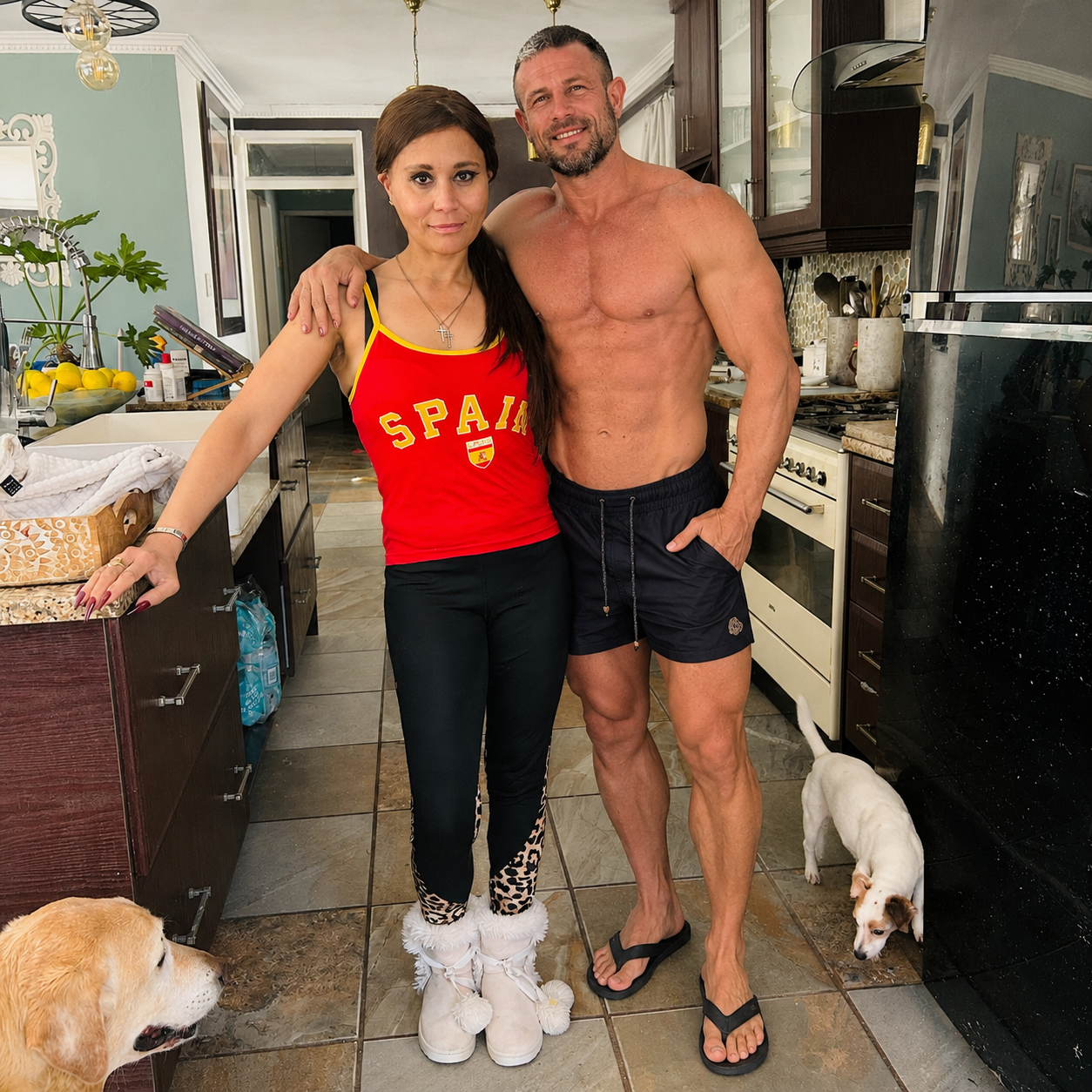
Today is a watershed day, for one reason and one reason alone: I am officially one year into the best day of my life. Twelve months ago I met someone who has assisted me in every possible way. Since meeting him, I have put on weight. My desensitisation has disappeared. I have been able to shower, to walk, to exercise — to do pilates, yoga, tai chi.
Before him, I weighed 36kg. By December 2025, I was up to 49kg. And can I just say: everything has improved. My doctors, and everyone around me, has been confounded. I don't know the how and I don't know the why, but I am grateful. So grateful.
He is the man in the picture. Twelve months of not-so-easy, but oh-so-beautifully wonderful. I am humbled and grateful to Gio. South Africa and Spain, a match made in the best of ways.
Sometimes the right person shows up and your body finally believes it is safe.
2 August 2026
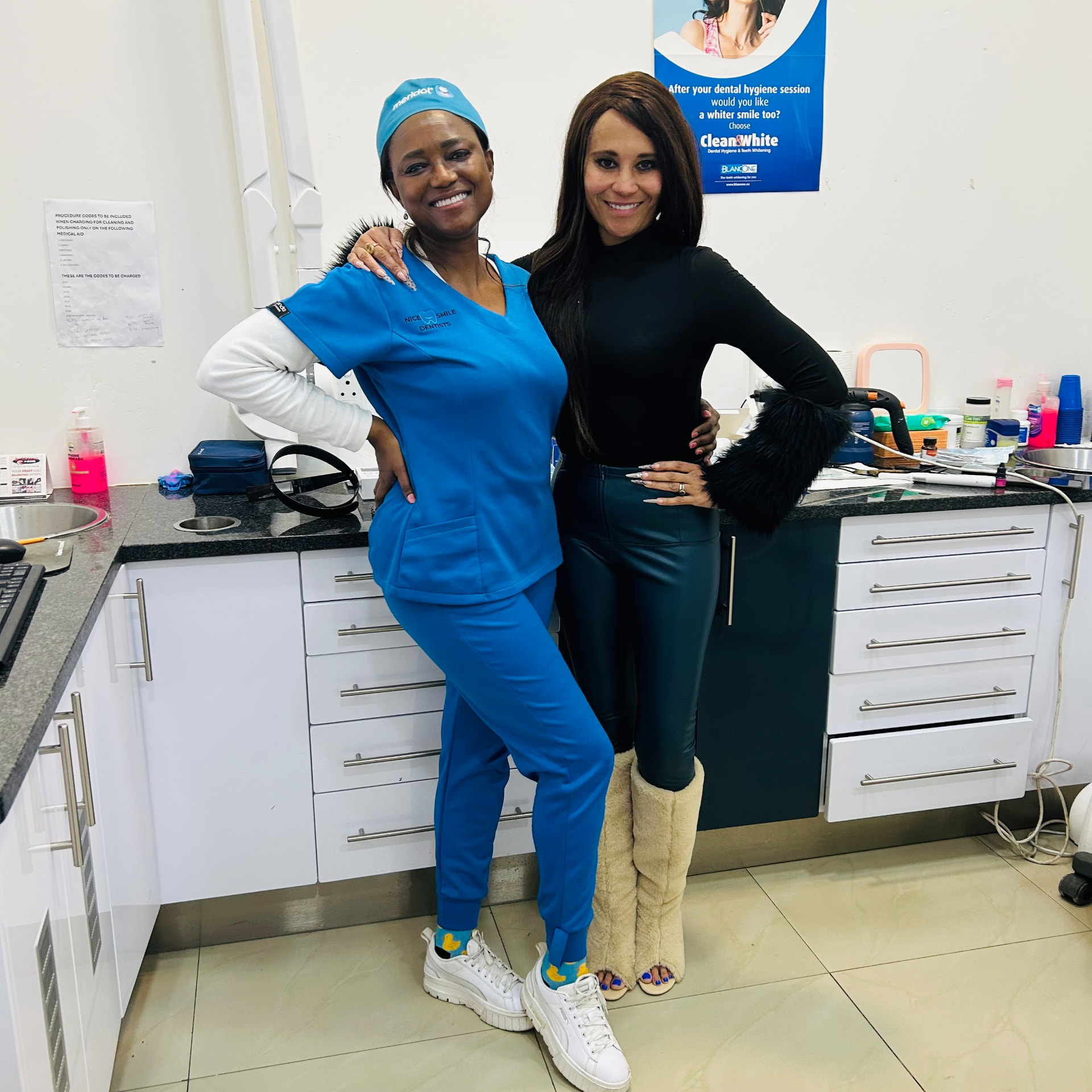
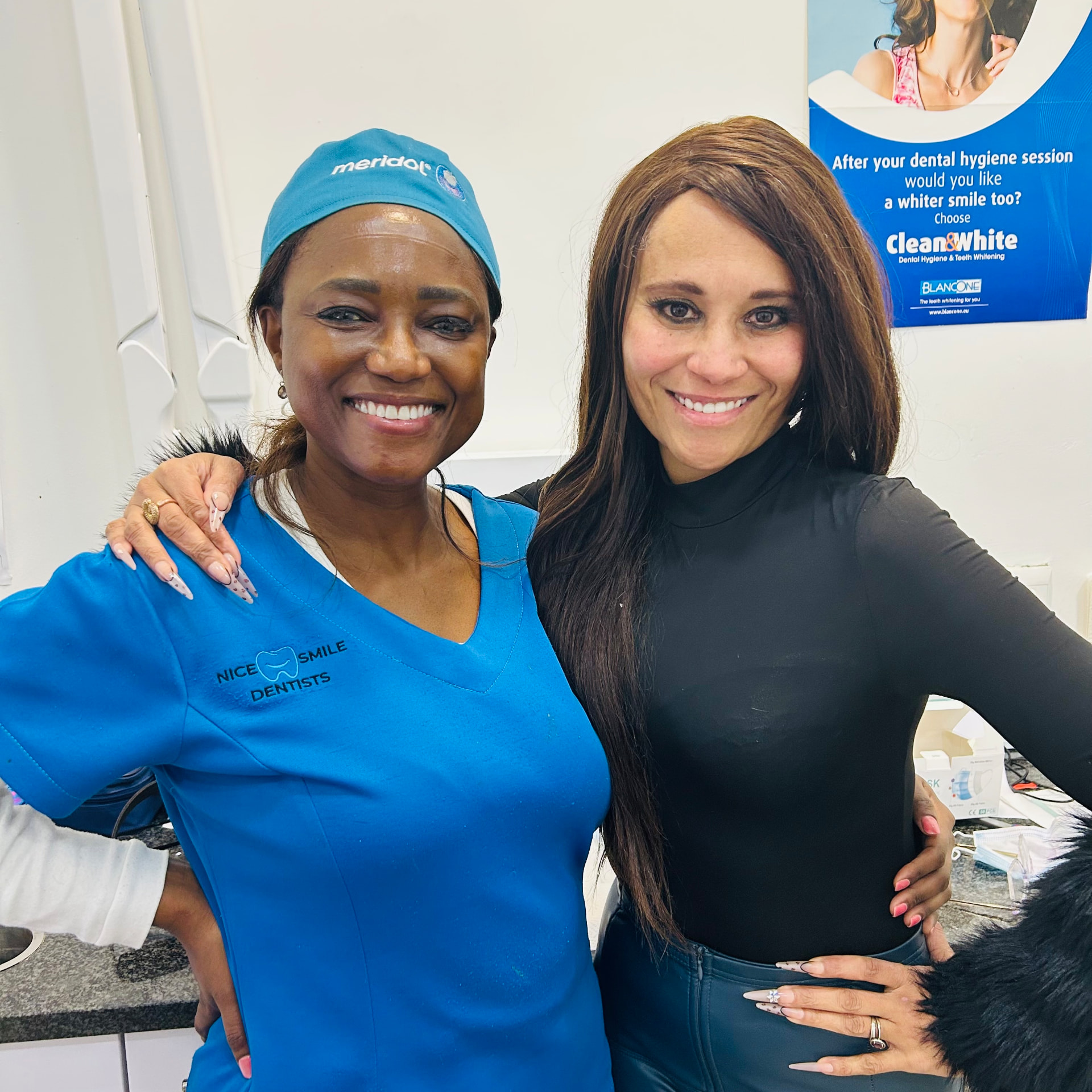
Doc gave me my smile back.
When you have SMA and gastroparesis, your teeth take a beating. The acid, the vomiting, the malnutrition — it all lands in your mouth eventually. I have needed all new crowns, and I now have a full upper zirconia set.
It has taken a year and a lot of pain, but Doc has been with me through the whole journey. She is kind, and she is the most incredible human being. God brings blessings across your path, and Doc has definitely been a great blessing.
Doc — thank you for being patient and caring, and most of all understanding. I get truly emotional when I think about all that you have done for me. You have given me my smile and my dignity back. For that I am truly grateful. Eternally blessed and grateful.
My heart is full, and my future is bright now. Thank you, from the bottom of my heart.
2 August 2026
Happy, grateful, sad, scared — and newly diagnosed with SMA.
I'm happy and grateful, and I'm sad. I am tired and I'm feeling a little lost. I'm scared and exhausted. It's been a great day and a hard day. I miss you so much.
I have been diagnosed with SMA — Superior Mesenteric Artery Syndrome. It's extremely rare and incurable. This will be my forever life, and it's hard. I'm sleeping a lot again, FND is terrible, and my reality is tough. It sucks, and I'm sad.
SMA is a compression syndrome: the third part of the duodenum gets pinched between the aorta and the superior mesenteric artery, so food and liquid can't pass through properly. It causes severe nausea, vomiting, bloating, pain after eating, and malnutrition. It's sometimes called Wilkie's syndrome, and it is as rare as it is brutal.
Another diagnosis. Another thing to learn. Another forever thing layered on top of FND, gastroparesis, dystonia, dysphasia and the rest. I don't have the words to make it sound brave tonight. I just have the truth: I am scared, I am grieving, and I am still here.
If you are reading this and you also have SMA, or you suspect you do: push for imaging. A CT or MRI with contrast can show the narrowed aortomesenteric angle. Find a team that knows motility disorders. And please don't let anyone tell you that rare means imaginary.
It is okay to be happy, grateful, sad and scared all in the same breath.
"This will be my forever life, and it's hard. It sucks, and I'm sad."
1 August 2026
Every time I close my eyes — the negotiator.
Dedication: Every time I close my eyes, by Babyface.
The self-doubt and self-loathing that come with FND are relentless. Regardless of the progress you make, there are just some times — some events, some blackouts — that leave you bruising ribs, cracking an elbow, and growing the biggest bump on your forehead. Then you get cross-questioned: how did it happen? And you don't know. You simply do not know.
This week I have lost hours. I have absolutely no clue what happened last Saturday, but thank God I'm alive. I am exhausted and sleeping too much again — funeral-style, dead-to-the-world sleep. I get so frustrated with myself. My body is holding me hostage.
I feel like Samuel L. Jackson in The Negotiator. Where the hell is Kevin Spacey when you need him? All of my Kevin Spaceys are busy or fighting their own life struggles, so in fact I feel alone and isolated. It kills me.
But today is meant to be spectacular. So I am going to dress up for it, swagger into the dentist, and complete a year-long journey. I am going to take more Lyrica, walk in ready to get this done, and get ready for Spain.
Hostage negotiations with your own body. Suit on. Lipstick on. Spain is waiting.
"Where the hell is Kevin Spacey when you need him?"
29 July 2026
Shouting for the unheard.
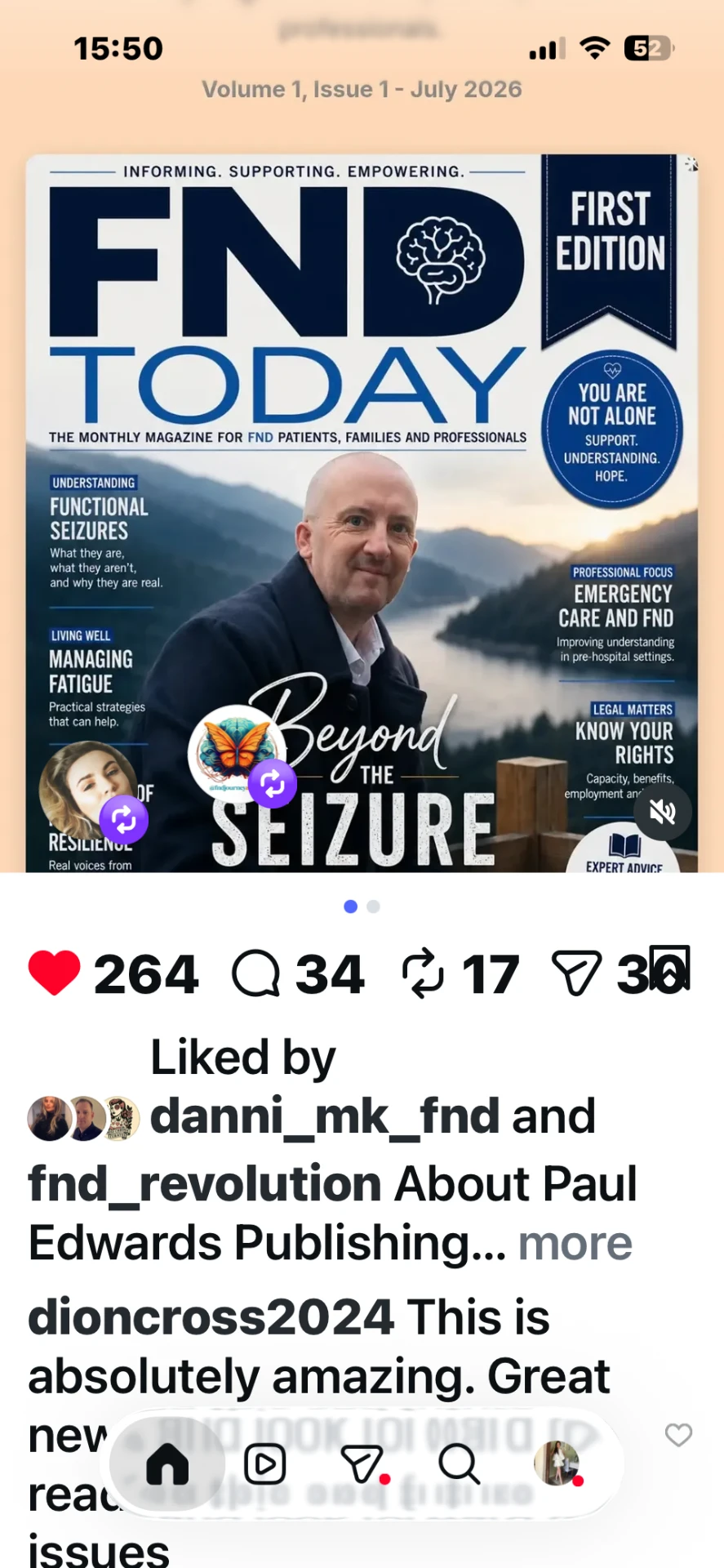
FND is isolating. It can steal your life if you let it. But there are people shouting so loudly that everyone can hear them — and because of them, the rest of us feel a little less invisible.
A huge thank you to @fnd_revolution on Instagram for constantly pushing the conversation forward. She shared the first edition of FND Today, a monthly magazine from Paul Edwards Publishing for patients, families and professionals.
The digital edition is free to download. Every person touched by it is one more person who can be heard and helped. That matters. Lived experience teaches us things no textbook can — it helps us relate to the vulnerabilities and complications people with FND live with every day.
You are not alone. And now there is a magazine to prove it.
Visit FND Today"Whoever saves one life, saves the world entire."
31 July 2026
Plummeted — but not surrendered.
Somewhere between last Saturday and today my health has plummeted. The bruising from where I fell is terrible, and I honestly feel like I have cracked a rib or two. The pain is unbelievable, breathing hurts — really hurts. My back is in pain, my right sole is constantly in spasm, and I cannot believe the rest of the pain.
I'm sleeping A LOT. Awake one minute and then lights out, dead sleep — funeral style. I feel like I'm losing days, not remembering what I've done. OMG, if breathing was easier, it would help, but this is the thing with FND. One day you are good and then the next few days, you feel like you are losing the battle.
I walked for the first time yesterday. It wasn't too bad; we took it slow and took Sarah Jessica to the vet for a pedi. She did so well — better than me, in truth. We did Tai Chi as well, which I haven't done for a good few days. I will definitely try again today. I can't just give up, but also, I cannot overdo it.
It scares me how terrible the pain is. It scares me that I am sleeping so much. It scares me that I am losing weight again. The gastroparesis is kicking my butt seven ways to Sunday. If only breathing would be easier. Oh wow, I am struggling.
Please, I cannot reverse this badly. Keep going, Cassandra. Just fight. Don't give up.
"One day you are good, and then the next few days, you feel like you are losing the battle. But you do not surrender."
29 July 2026
The face that stops men in their tracks.
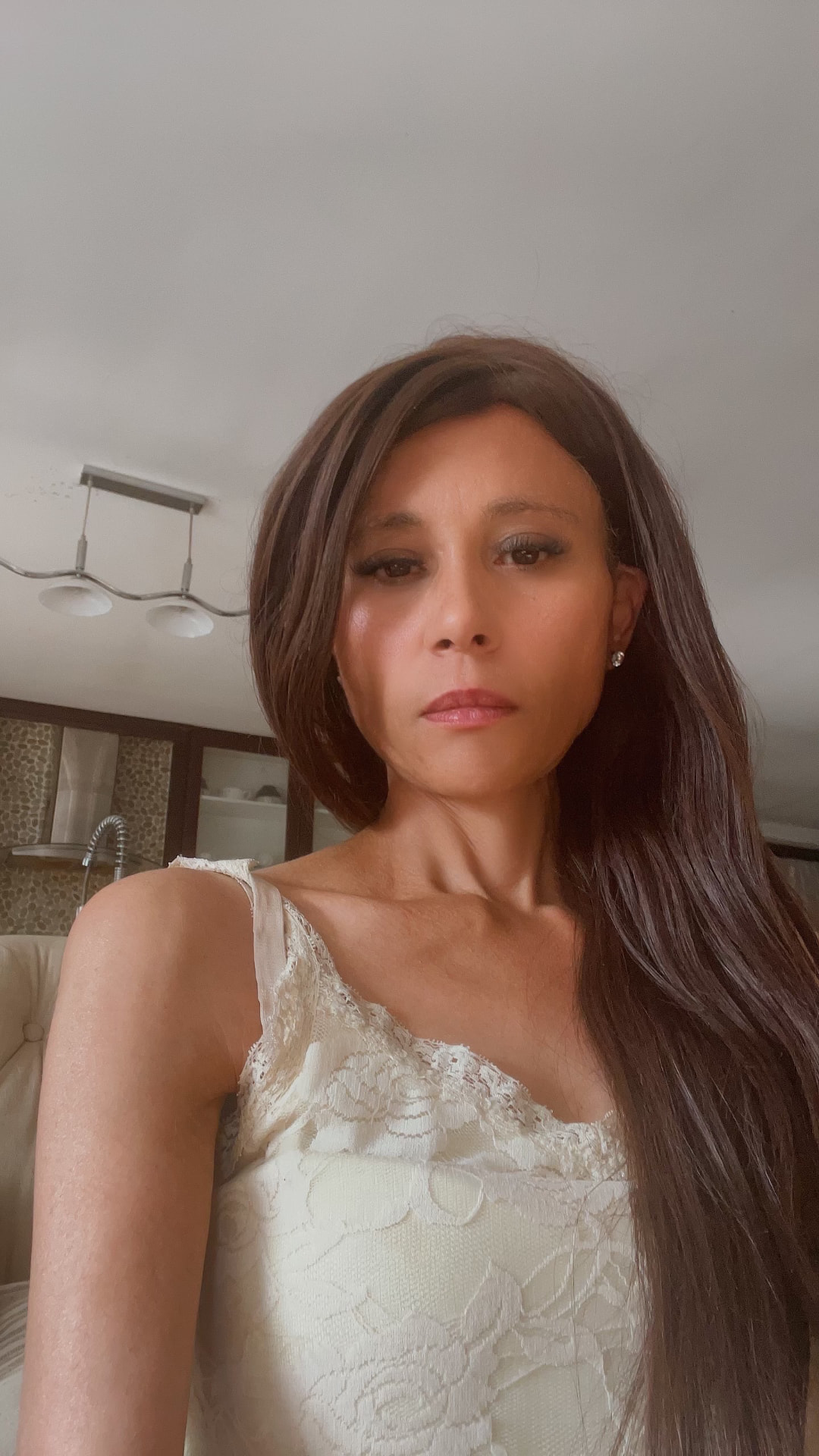
Concussion behind me, bruises still colouring — and I looked in the mirror this morning and thought: no. FND does not get to decide who I am today. I do.
So I washed my hair, put on a lace cami, softened my eye with a warm bronze, brushed a glossy nude across my lip, and let the rest of me catch up. Small rituals. Big rebellion.
This is the face that stops men in their tracks — not because of the makeup, but because of the decision behind it. Be who you want to be, and can be. Even from inside a body that has been trying to write a different story all week.
Polished is not perfect. Polished is intentional.
"Be who you want to be, and can be. The rest of the room will catch up."
28 July 2026
Concussion, bruised ribs, and a weekend I cannot account for.
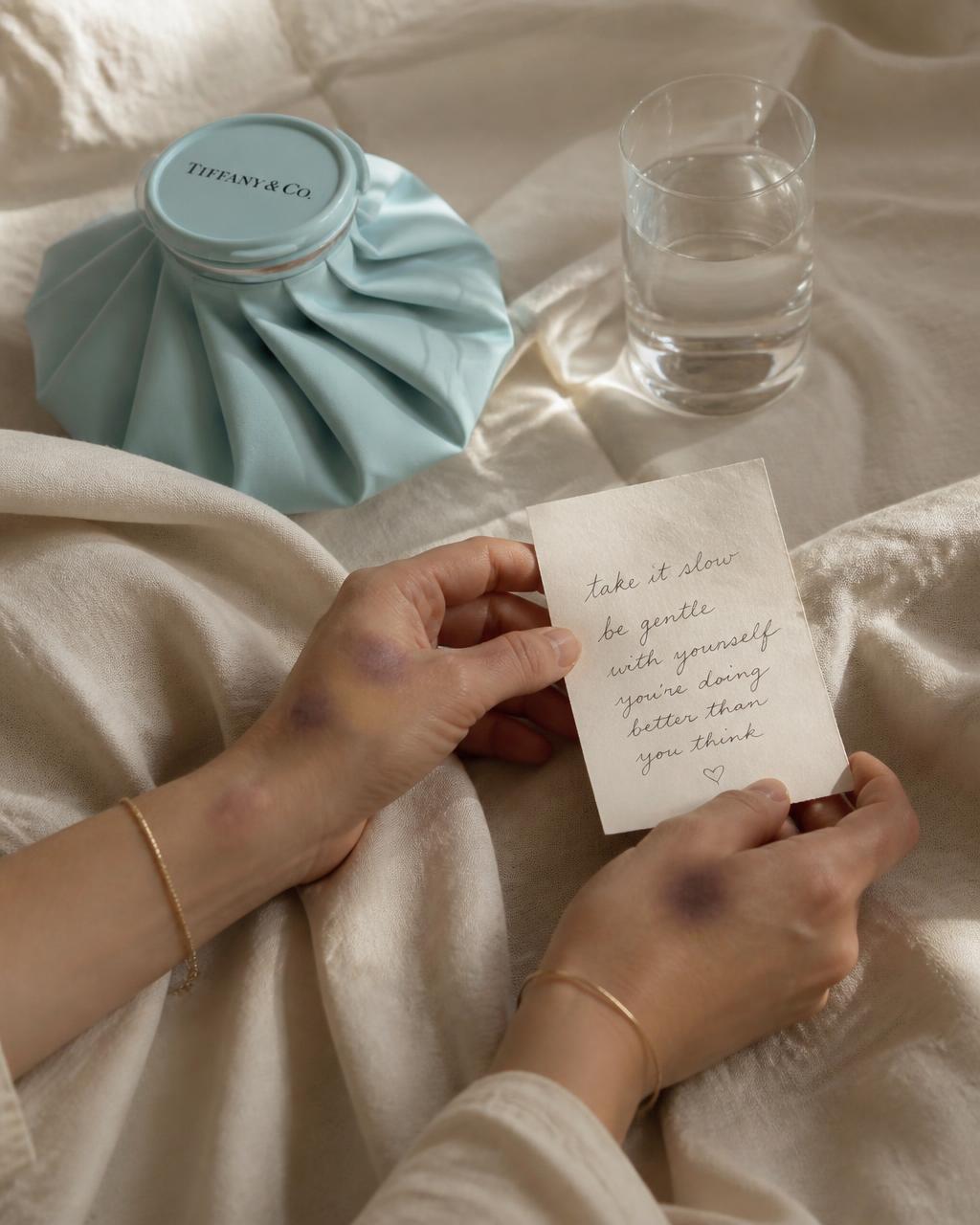
Concussion. My ribs and elbow are bruised. I am still unsure of what happened this last weekend. The pain is excruciating, and I think that is what is so scary — when all you are left with is bruises and pain, but you don't know how you got there.
I just don't know where I fell, how I fell, how I fell. I am still sleeping like crazy. I rose from my deep sleep yesterday at 14h00. I still can't remember conversations. I know that I cried, but who with, I have no idea.
It's scary. When life is a blur, it scares me. I can't even tell you what happened before or after. The weekend has been erased, and my body is the only witness left.
FND turns the body into a crime scene with no suspect, no motive, and no memory of the crime.
"When all you are left with is bruises and pain, but you don't know how you got there."
27 July 2026
Woken at 14:30, bruised and blank.

I have been so sick. I woke up at 14:30 this afternoon. I have bruises everywhere, I knocked my head, and I can't remember anything. OMG it's so scary.
The day is half over before I even arrive in it. My body looks like a map of places I don't remember hitting. And my head — the one thing I need to think, to write, to make sense of any of this — feels like it belongs to someone else.
This is the part I hate most: not the pain, not the bruises, but the blank. The not-knowing. The fear that pieces of my life are being erased while I'm still inside them.
FND doesn't only steal movement. Sometimes it steals the afternoon, the memory, the certainty that you are still the one holding the pen.
"I can't remember anything. OMG it's so scary."
26 July 2026
I fell, and yesterday is gone.
I fell. Knocked my head, bruised my ribs and practically cracked my elbow. Yesterday is a complete blur. In fact, not so much of a blur as opposed to completely dead to me. I remember NOTHING.
I've watched The Devil Wears Prada 2 — this is the third time. Dear God, will I remember any of it? I'm frustrated, I'm scared, I feel helpless and hopeless.
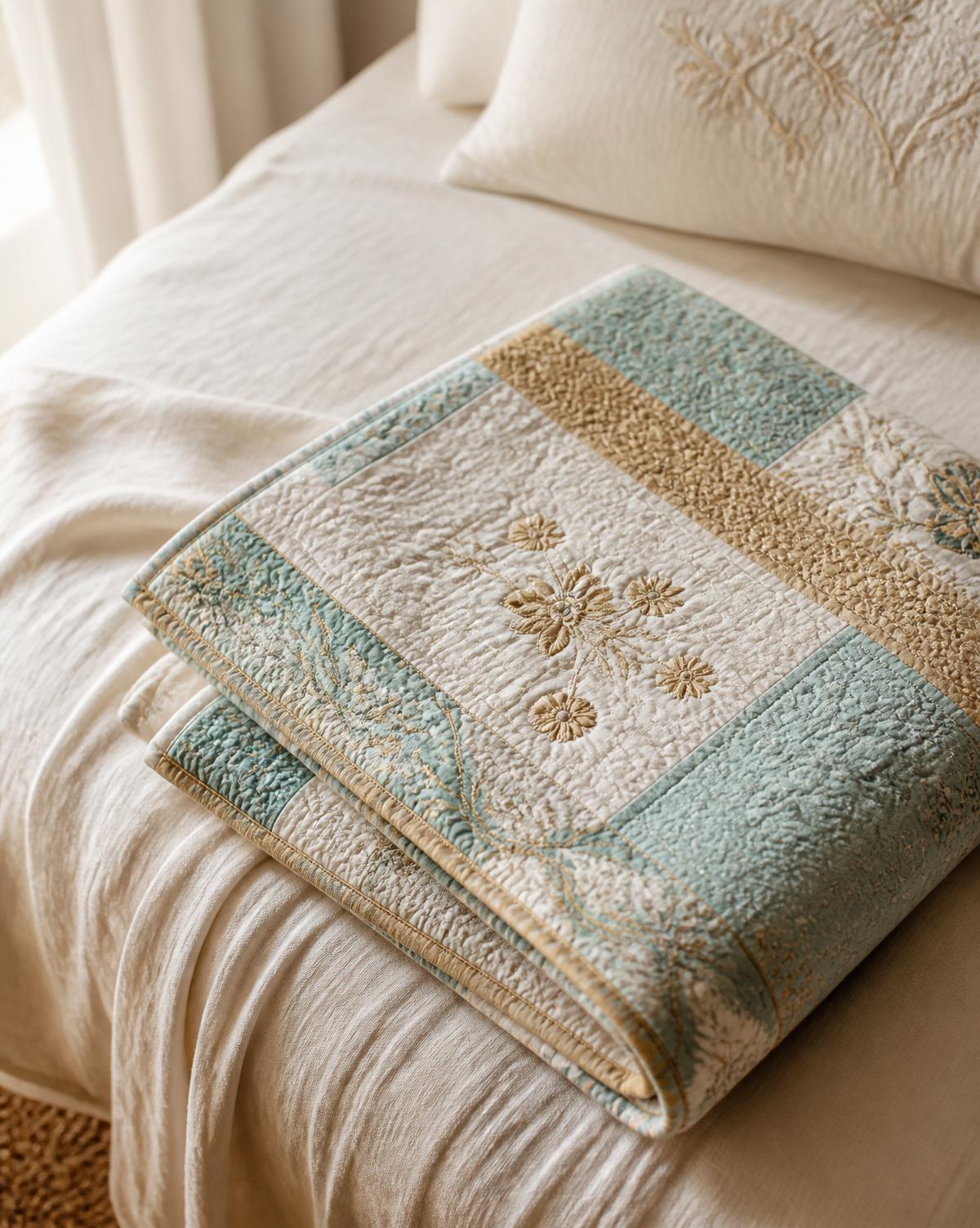
I bought a quilt today. It's beautiful. I love it. That's about it. I have nothing else to say. I'm scared. I'm truly scared.
This is the part of FND nobody warns you about — the days that disappear, and the body that keeps finding new ways to fall.
"I have nothing else to say. I'm scared. I'm truly scared."
25 July 2026
The optics, and why I no longer have room for passengers.
The optics. Everyone is always so preoccupied with how things will look to the outside world. If you decide to quit or change routes or change doctors or stop certain medications, it's always the optics.
I've come to the epicentre of my life and I only have room for me right now. I don't have time for lies or passengers or to teach people how to love and accept me for me. Choosing yourself is not a sin — on the contrary, it's why you are here.
I can't and won't be made to feel like a burden, or for pity to be bestowed upon me because, "oh shame, look at the poor sick girl". There will always be mountains to climb, valleys to sit in, but in those peaks and troughs — between the lashes and the makeup — is a human being just fighting for legitimacy.
I'm not here to impede others. I am here to run my race, to live authentically within the means that I have been given. Walking away from what no longer serves you or brings you joy — that is your right, the same as it is for everyone else.
The road less travelled by may be dark and lonely, but find the peace and the joy on that journey, because it is one hundred percent your own.
Choosing yourself is not a sin. It is why you are here.
"Between the lashes and the makeup is a human being just fighting for legitimacy."
2023 — 2024
Just how sick I was.
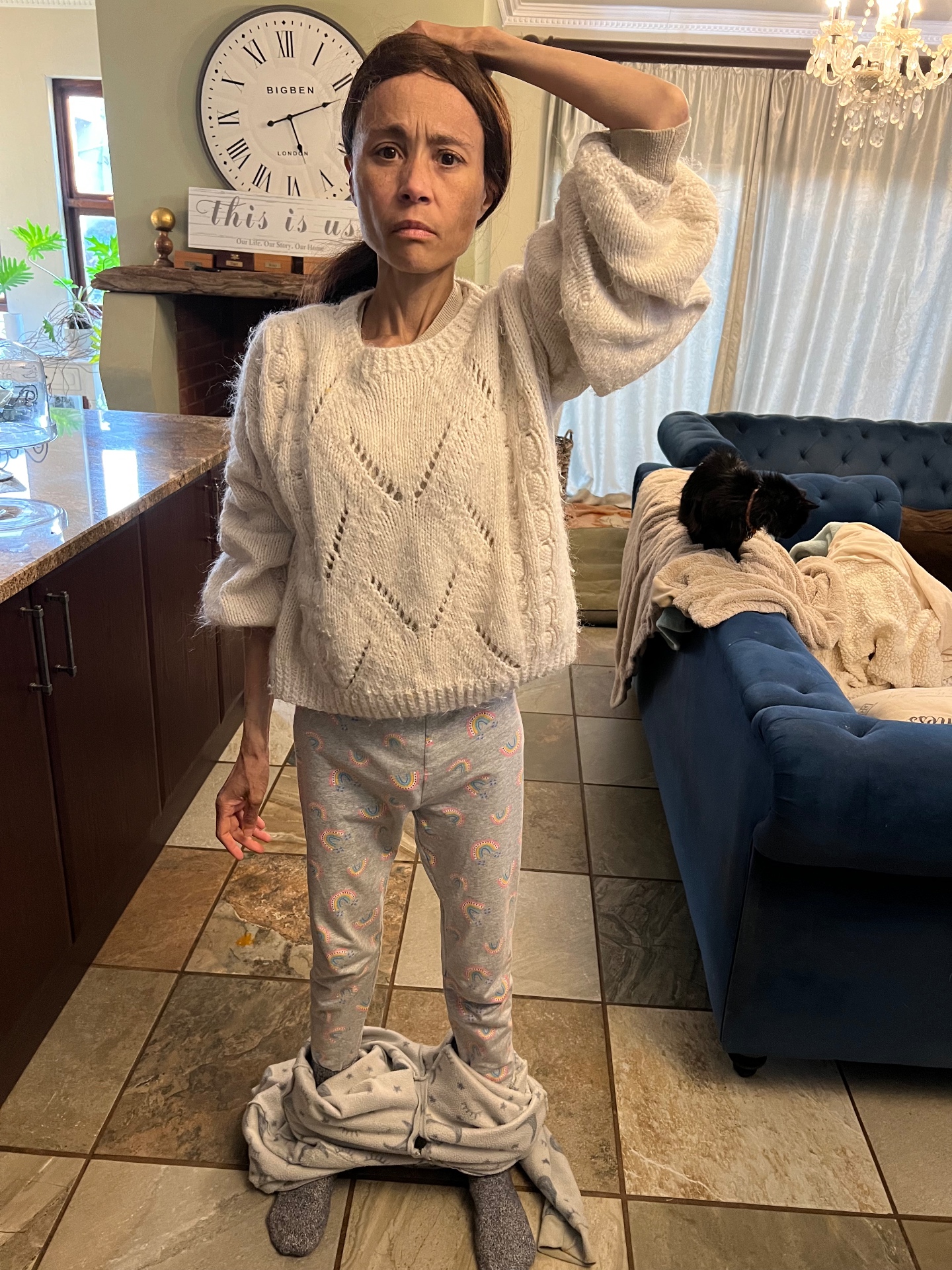
This is me, just before I ended up in hospital in 2023. God help me — I am sick now, but back then I was beyond dead. The walking dead. My sweatpants wouldn't stay up. My body had quietly disappeared while I was still trying to live inside it.
I share this not for shock, but for honesty. So that anyone in this season of their own story knows they aren't alone, and that bodies — even bodies this tired — can begin to come back.
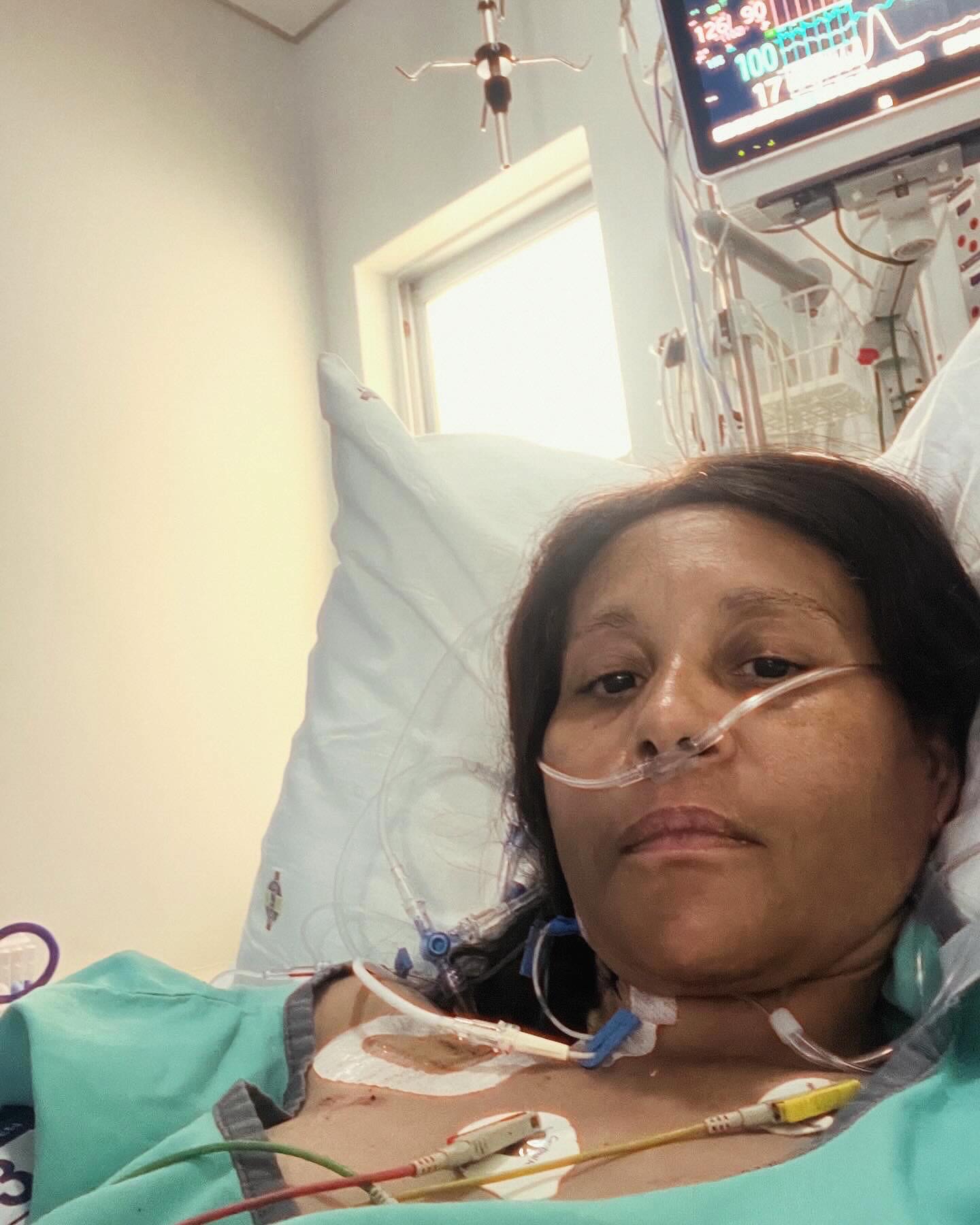
2023 and 2024 were horrendously bad. Central lines, oxygen, monitors, more admissions than I can count. There were days my body felt like it was closing the door — and nights I wasn't sure I'd see the morning.
I keep this photograph not to dwell, but to remember. To honour the version of me who held on through that. To anyone reading this from a hospital bed right now — please hold on. The chapter you are in is not the whole book.
And then — look how far I've come in less than a year.
My life took a turn for the better on 3 August 2025. I won't pretend I know exactly why that date held the key — only that something shifted. The right team, the right treatment, the right small daily choices, all finally pulling in the same direction. I am still healing. But I am here. And I am living.
2024
The not-so-silent killer — gastroparesis.
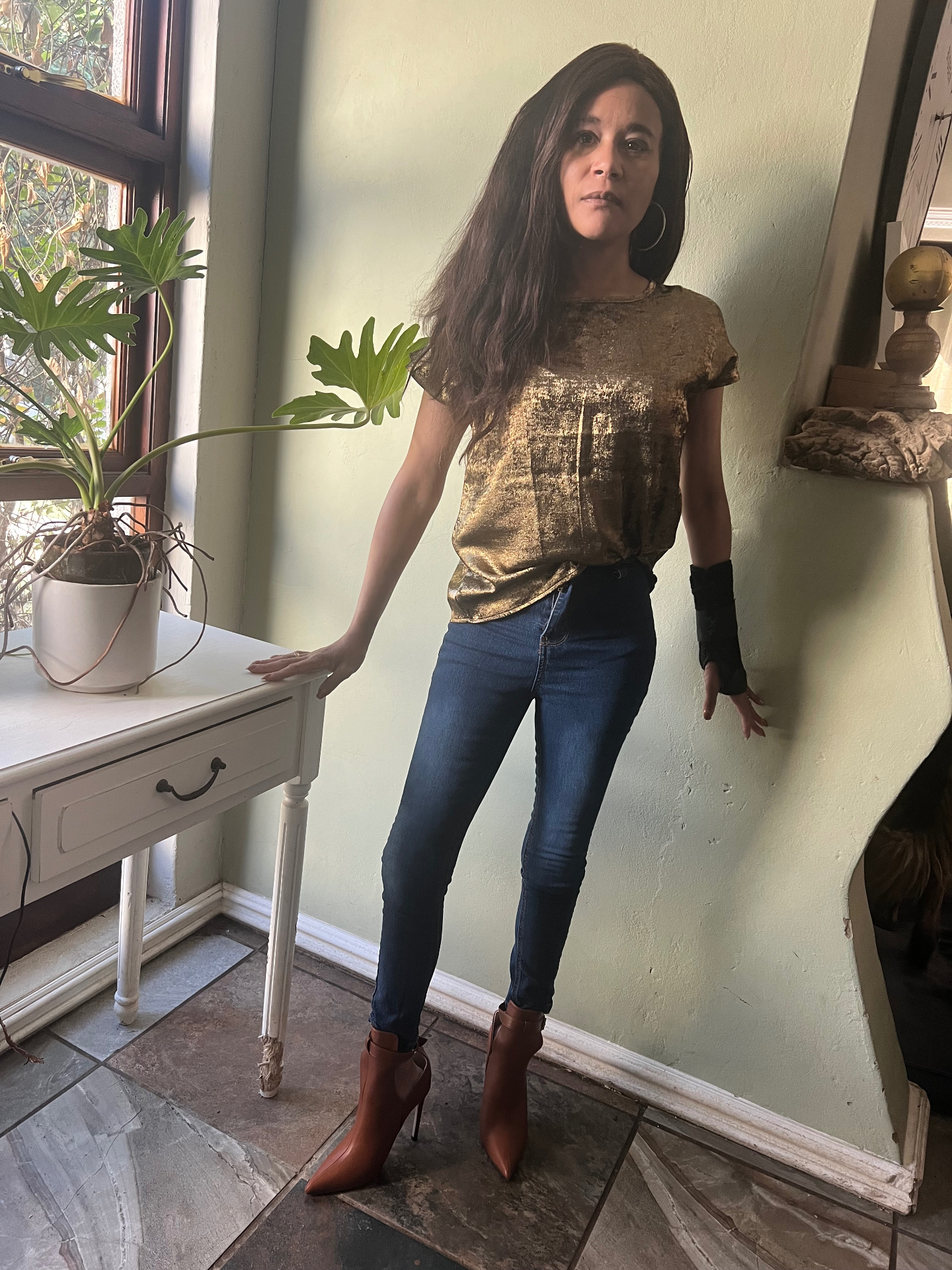
I look at this photograph and I see a woman who had already lost so much weight her clothes were hanging on by willpower. The gold sequin top catches the light, but underneath it my body was being robbed — of nutrients, of strength, of the simple joy of eating.
Of all the FND and FND-adjacent symptoms, gastroparesis is the not-so-silent killer. It robs you of your heart and soul, of your body, of the person you recognise in the mirror. I hated myself in this season. I could not understand why my own stomach had turned against me.
I found my way through partly by finding community — people on Instagram like @gastroparesisawareness2024 who were sharing the exact information I needed, in real time, from real experience.
If you are living with this: please share your story. You never know who it may help. And if you are an able-bodied human reading this — lead with kindness. The body you see may be fighting a war you cannot imagine.
I hope I am helping someone out there.
Two and a half months in hospital
The feeding tube, the transfusions, and the behemoth I hadn't met yet.
I share these photographs and the medical detail carefully — not for shock, but because someone reading this may be sitting in a room like the one I was in, hearing words they don't understand, trying to work out how they got here. If that is you: you are not alone, and none of this is your fault.
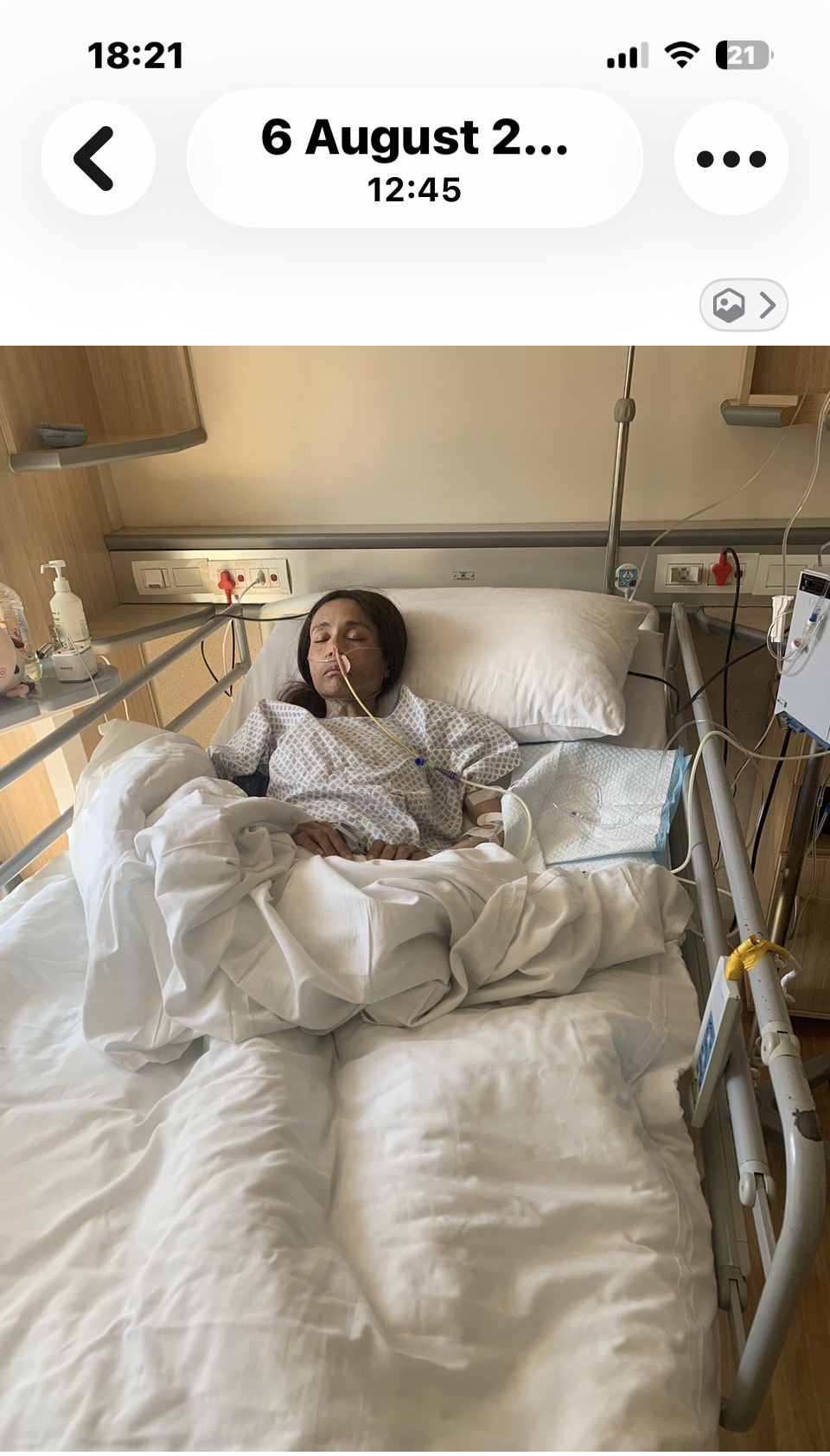
Can you see the feeding tube? It was a nightmare. They kept placing it back down my nose in the hope it would reach far enough to feed me. My vagus nerve had collapsed onto my stomach, so the nerves that tell the gut to hold food and break it down simply weren't firing. Food had nowhere to go.
That feeding tube went back in probably thirty times in two and a half months. Gastroparesis was front and centre — I was vomiting up every extra smoothie they gave me, and the vomiting was so violent that the tube would come straight back out with it. Rinse. Repeat. Try again.
Eventually the plan was clear: I had to gain enough weight to survive a major operation — a bypass from the oesophagus into the jejunum, the middle section of the small intestine. The jejunum is a muscular tube roughly 8 feet (2.5 metres) long, responsible for actively breaking down food and absorbing the vast majority of vital nutrients and water into the bloodstream.
Description of the jejunum with thanks to the Cleveland Clinic.
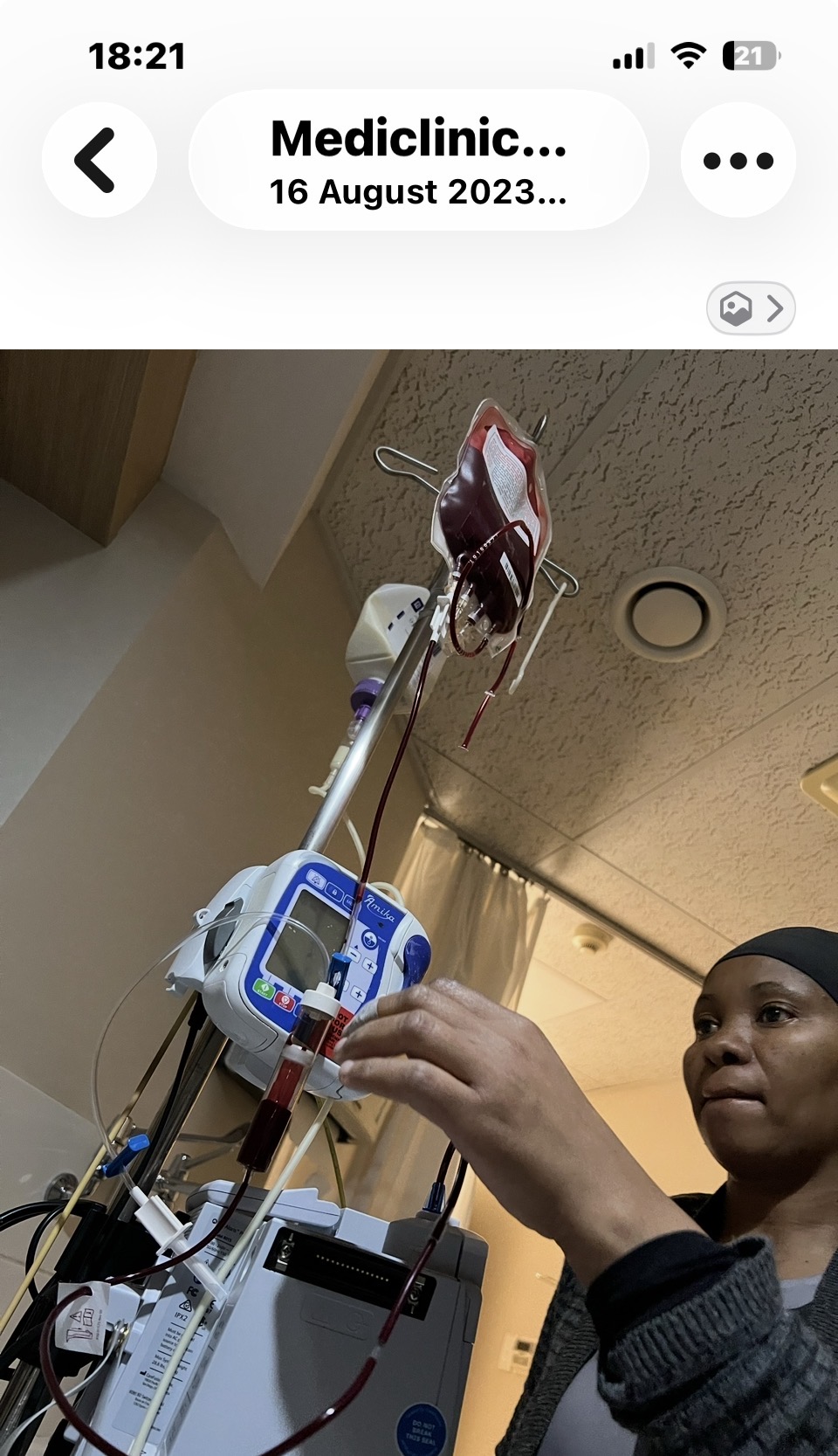
This photograph is from the day I urgently needed both white and red blood cell replacement. My body had run out of the raw materials it needed to keep going, and the transfusions were the only bridge to the next hour.
To every nurse who hung a bag, checked a line, and spoke gently to me while they did it — thank you. You held the ceiling up when I couldn't.
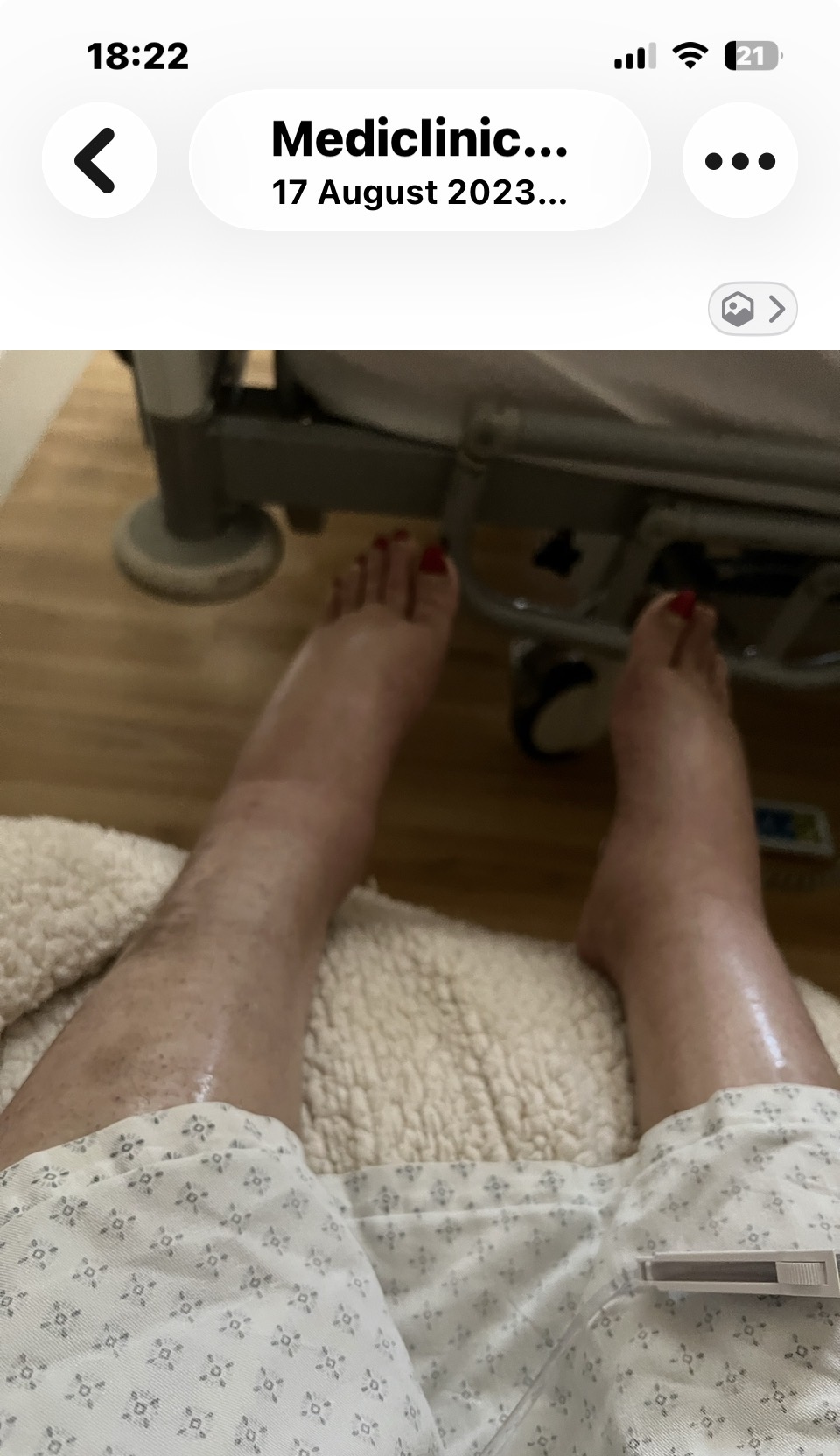
Then the kidneys began to fail, and everything swelled. The most alarming of it was in my feet — puffed and shining, unfamiliar to me. On top of that, I contracted C. difficile in hospital: a bacterium that causes severe inflammation of the colon (colitis). It typically infects people whose healthy gut bacteria have been depleted, allowing the resilient C. diff to multiply and release harmful toxins.
C. difficile definition with thanks to the Centers for Disease Control and Prevention.
I had pancreatitis twice — inflammation of the pancreas, a vital organ behind the stomach that produces digestive enzymes and insulin.
Pancreatitis explanation with thanks to the Mayo Clinic.
I am still in medically induced liver failure — and even that wasn't improving at the time. All I really remember is sleeping. So much sleeping. My little body was quietly fighting everything at once.
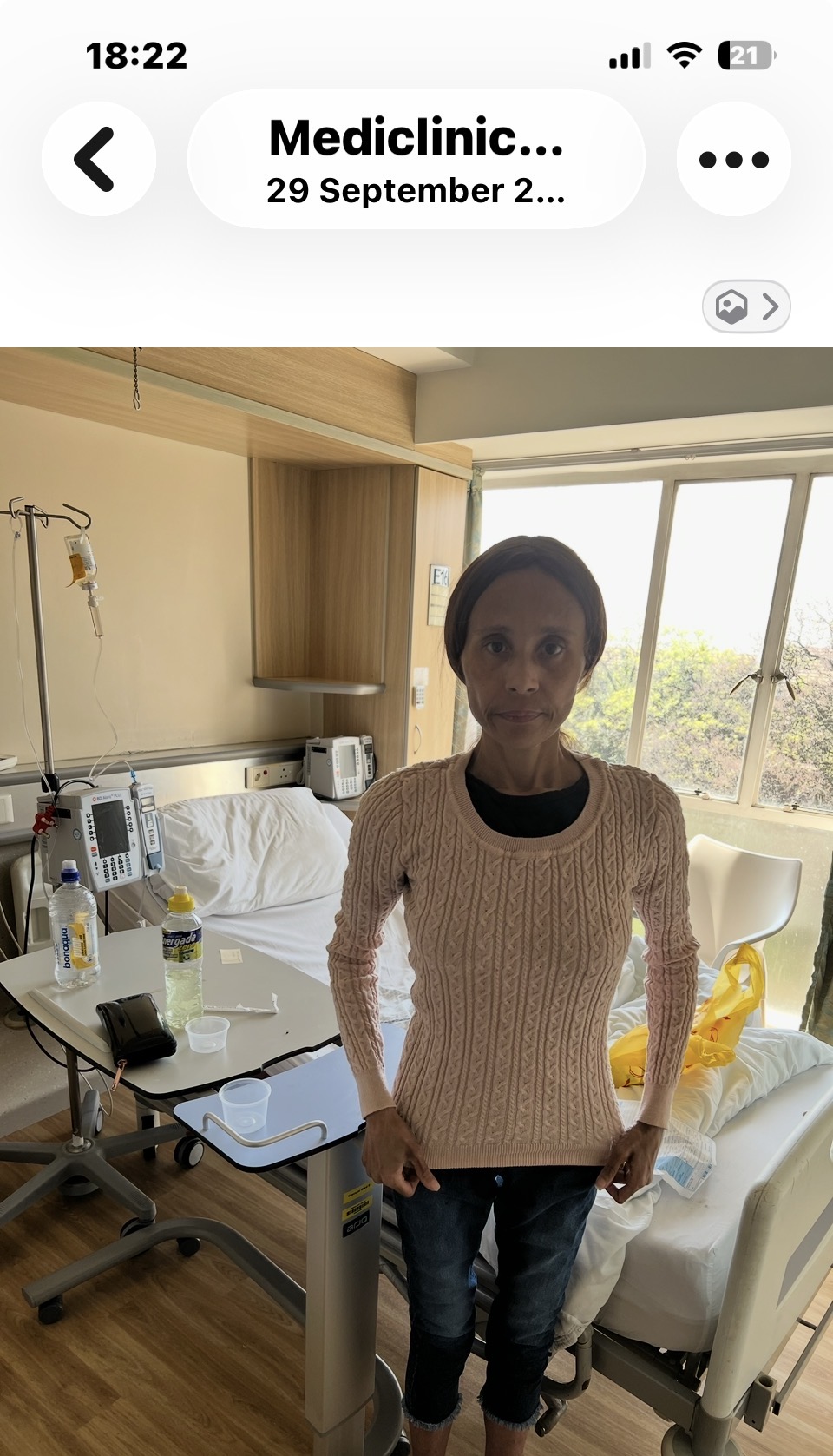
Finally, when I reached 35 kilograms, my team were cautiously confident I would survive the operation. This last picture is from the day I left hospital. My mom had bought me clothes from the children's section, because nothing else would fit.
I thought that would be the end of the nightmare. It wasn't. I had not yet been introduced to the behemoth that is FND. The bypass and I would have more teething problems too — another fatal face-off with death. But that is a chapter for another day.
Hope still springs eternal.
I have since gained weight in a healthy way. My story is not over — no, it has only just begun. I am hopeful that more improvement will come. I just need to keep fighting, and hold on to the magic carpet.
Medical definitions on this page are drawn, with gratitude, from the Cleveland Clinic (jejunum), the Centers for Disease Control and Prevention (C. difficile), and the Mayo Clinic (pancreatitis). Please always speak to your own clinical team about your care.
What stays
The symptoms that may never go away.
I have worked so hard to get to this point. I actually look healthy. I feel inspired. But some symptoms stay — quiet, stubborn passengers — and the fight to regain the former life I had is steadfast. I fight hard every day to praise the person I've become, look forward, and keep moving forward. One inch at a time.
Gastroparesis
A stomach that forgets how to empty. Meals sit heavy, nausea lingers, persistent vomiting takes its toll, and eating — once one of life's great joys — becomes a careful negotiation. I've learned to eat small, eat slow, and forgive my body when it says no to a plate I once would have cleared. It is exhausting, and it is real.
Where I learned I wasn't going crazy — and could finally put a name to what my body was doing.
@gastroparesisawareness2024 →Dystonia
Muscles that contract and twist without permission. My neck pulls, my hand curls, my posture shifts into shapes I didn't choose. It is painful, it is visible, and it is deeply unfair. But I have learned to breathe through it, to rest through it, and to find clothes and positions that give my body grace even when it won't hold still.
Dysphasia
Food that gets stuck in your oesophagus when you're vomiting — and stays stuck. It isn't in your stomach anymore, but it won't come out of your mouth either. The fear is the worst feeling in the world: suffocating to death, and unable to scream for help because nothing can move past it. The test for it is its own horror — a pipe threaded down your nose, then the swallow study. Mine opens, closes, gets lazy, and then simply stops working altogether. The only thing I can liken it to is drowning — except this time it's the food, and you are completely helpless.
Desensitisation
A nervous system turned up too loud. Light, sound, touch, temperature — all of it arrives at full volume. What others barely notice, my body reads as threat. I've had to rebuild tolerance inch by inch: a dimmed room, a soft fabric, a single voice before a crowd. Progress is glacial. But glacial still moves.
The power of pain
Fear is the thing that multiplies it.
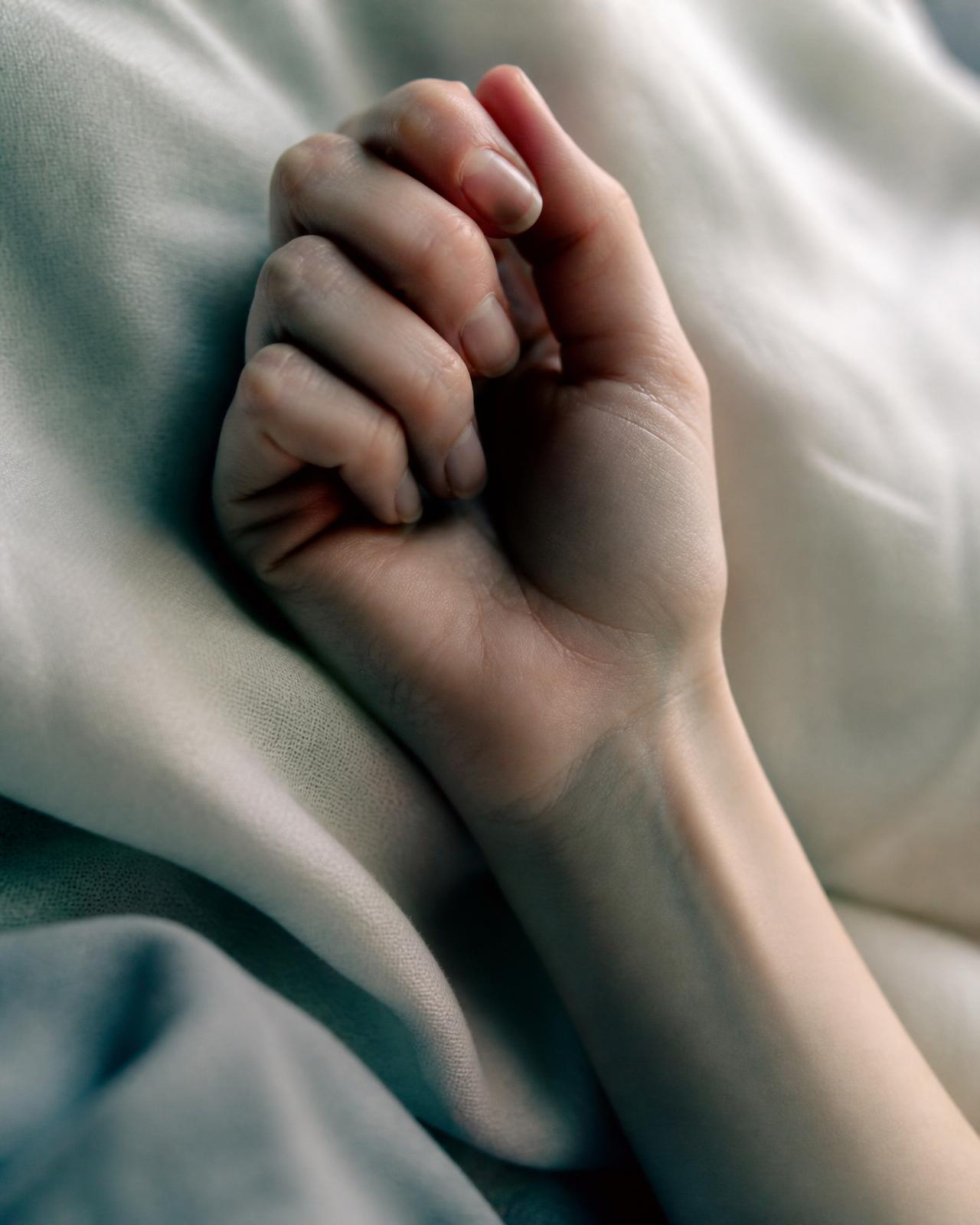
The crippling pain of FND is something that never goes away. What truly takes my breath is stress. Stress harnesses whatever pain level I'm already in and kicks it up by two thousand percent. The fear of how bad it will be — will I walk, will I talk, will I move, will I get through the day — is its own second illness.
I live with fear and anxiety every day. And yet, when I wake up, I get determined. I push through whatever pain is there. I walk. I talk. I journal. I remember what I've done, seen, read. Some mornings that determination is the only medicine I have.
Yesterday was so hard. I woke with my body contorted, hands and feet in spasm, my lower back seized, crying and screaming in pain. In moments like that my brain sends fear signals through every inch of me. The pressure to live a happy life blurs. Fear and anxiety arrive and make me a slave to the pain — I feel everything: blood moving, bones aching, my body curling into a ball of tears.
The genesis this time was small and ordinary — my phone was stolen. My banking, my social media, my emergency lifeline, my whole portable life, gone. I spiralled. I panicked. I couldn't breathe. Then the migraine. Then the seizures.
Functional seizures present like epileptic ones — but they aren't. I can't tell you if they're worse or the same; I can only tell you that I am fully aware the whole time. The more it takes hold, the more I panic, the more it grows.
From the outside you see someone walking without an aid, smiling, showing up. From the inside, my life is a constant boxing match with Mike Tyson — and my Mike Tyson never rests, never stops, is always present, always trying to consume me.
But no one wants to hear about a sad life every single day. So I get up off the floor. I land a few hits back — just so he knows how determined I am to carve out a new life, to live an authentic one, to refuse fear and pain as my masters.
I do this every day because I will not allow FND to define me.
The ugly face of FND
"My head hurts." Two hundred times.
Written in the middle of it
Oh no. I just screamed "my head hurts" two hundred times. My stomach is burning. My body is aching. I am sobbing.
This is the ugly face of FND. One minute you're handling it — the next, your brain sends you into a death spiral of pain and sobs. It hurts so bad.
And still — I will get back up. Just not this minute.
A poem for the fire
Invictus, by William Ernest Henley.
Pain, chronic pain, pain-screaming-in-your-head kind of pain. When you attempt to breathe through it but nothing helps. You just know it's like walking a tightrope — you have to keep looking at the end of the line and focus on getting to the other side. Looking down will not help; in fact, it is your demise if you do.
No knight in shining armour is going to ask you to let down your hair so he can save you. No doctor, no medication can stop the misfiring of the pain receptors. There is a fine line between moments of some relief and then nothing — just nothing but pain. I have learned to make peace with the fact that the pain may be permanent; what I do about it, how I push and mentally overcome it, is up to me. This existence is like an all-consuming fire, and only I can run from the heat in the best and most powerful way I can. I almost have to be like a horse with blinkers on. I cannot — I will not — make it my master.
Out of the night that covers me,Black as the pit from pole to pole,I thank whatever gods may beFor my unconquerable soul.
In the fell clutch of circumstanceI have not winced nor cried aloud.Under the bludgeonings of chanceMy head is bloody, but unbowed.
Beyond this place of wrath and tearsLooms but the Horror of the shade,And yet the menace of the yearsFinds and shall find me unafraid.
It matters not how strait the gate,How charged with punishments the scroll,I am the master of my fate,I am the captain of my soul.
Invictus · W. E. Henley · 1888
— William Ernest Henley, 1888
The dentist chair
When the pain was dialled up to 2000%.
Last Saturday I had a dentist appointment. I had forgotten to take my Nurika the night before, and the pain of the injections almost killed me. Chronic pain is a major part of FND — skipping that one tablet dialled everything up to 2000%. Okay, I'm exaggerating about the dying part. Barely.
What happened next was predictable, and it scared everyone in the room. I had a massive seizure in the dentist chair. A nurse holding my legs down. The prosthodontist holding my shoulders. Another nurse fanning me. I held back the tears until I could — I was devastated to have a seizure in public. The only other time it had happened out in the world was long before my diagnosis, when none of us even knew what it was.
Functional seizures are their own particular nightmare, because you are fully aware the whole time. It's a Nightmare on Elm Street — like Freddy Krueger is trying to suck you through the bathtub plug. (I almost forgot the other big one, with my physiotherapist. She handled it like a champion — but it scared us both.)
Honestly? I hear the Jaws theme when a seizure is coming. It gets louder and louder in my head as my entire body loses control and tightens until I'm twisted like a pretzel.
To my fellow FND champions — if you relate, tell me. One for all and all for one.
Being the water
Just because I can walk, doesn't mean I am healed.
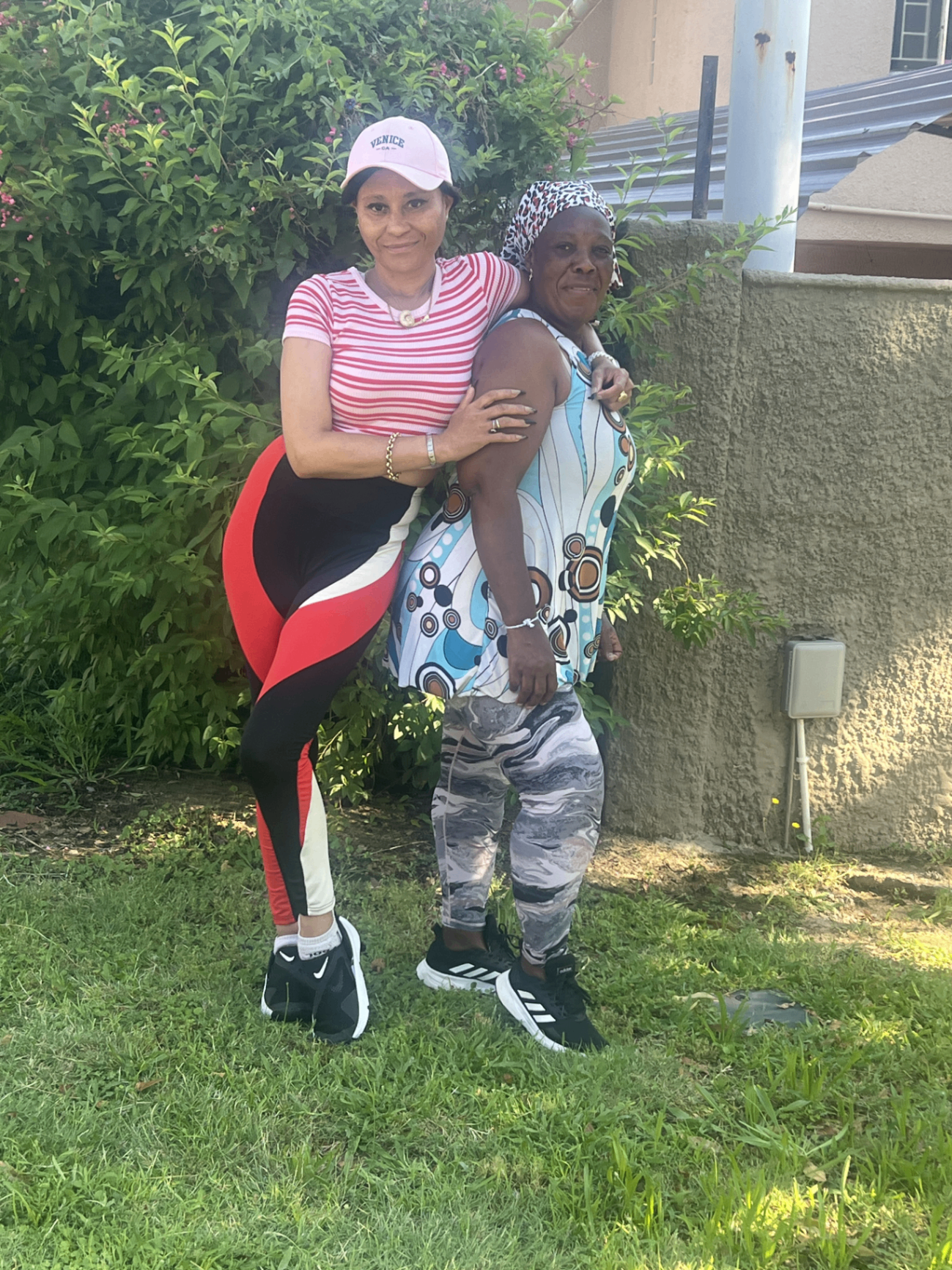
When I lost my ability to walk unaided, I was so confused. It was so jarring. I left hospital after two and a half months walking on my own, no aid — and then one day I had to hold onto the wall. My walk got slower, more laboured. My feet started to contort. Next I was using a walker, like a ninety-year-old.
I remember avoiding the aisle in Dischem Nicolway — the one with the adult diapers, the walkers, the walking sticks. And then that aisle became my reality. I went numb. To cope, all I did was hit the ball as it came to me. Then the seizures and tics. My eyesight was already suspect. Then liver failure, chronic nausea, vomiting. By the time the chronic pain hit, I was circling the drain.
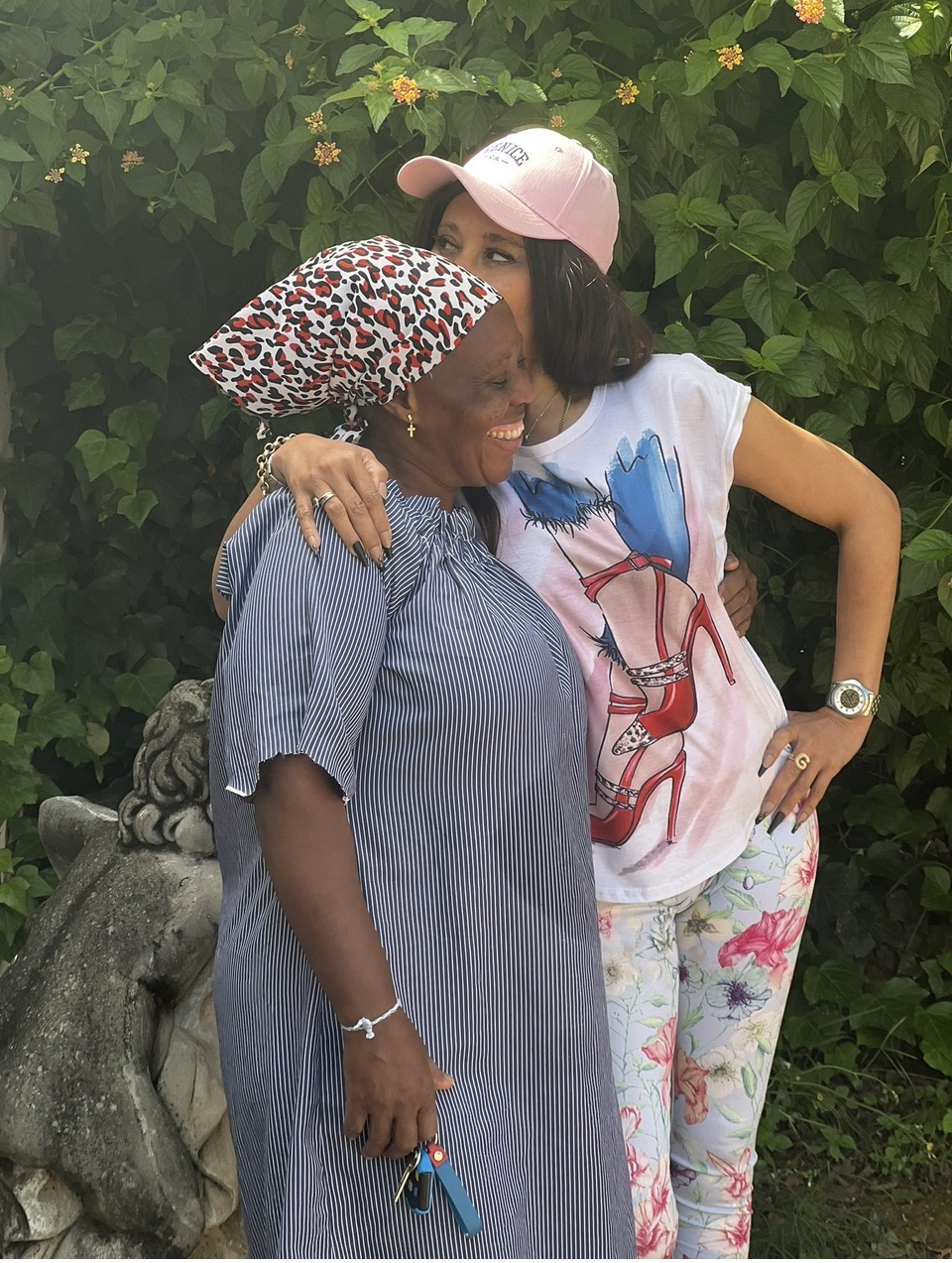
Today, I walk five days a week with my helper Ntombi. But I walk.
Pilates, stretching, tai chi — five days a week. I want to control what is within my remit to control. The other horrible elements of FND that may never leave, I will weave into the next chapter of my life. As long as I stay strong in mind, never forget where I've come from, and celebrate my wins, I can keep progressing in the places I am still allowed to grow.
I am blessed to be alive. I'm like a cat with twenty-nine lives, never mind nine. I do what I can. I rest as much as I can. That small gesture is what makes the next day easier. Resting is not giving up — I know about giving up. When I weighed 29 kilograms, I was praying to die. Now I want to push myself to my marrow when I can, and rest when I must.
I am like Bruce Lee. I am being the water.
A thank you
To Ntombi — who walks beside me, literally, five days a week. You are part of how this chapter gets written. Thank you.
The littlest woman
A grande cappuccino, a walker, and a girl trying so hard to keep it together.
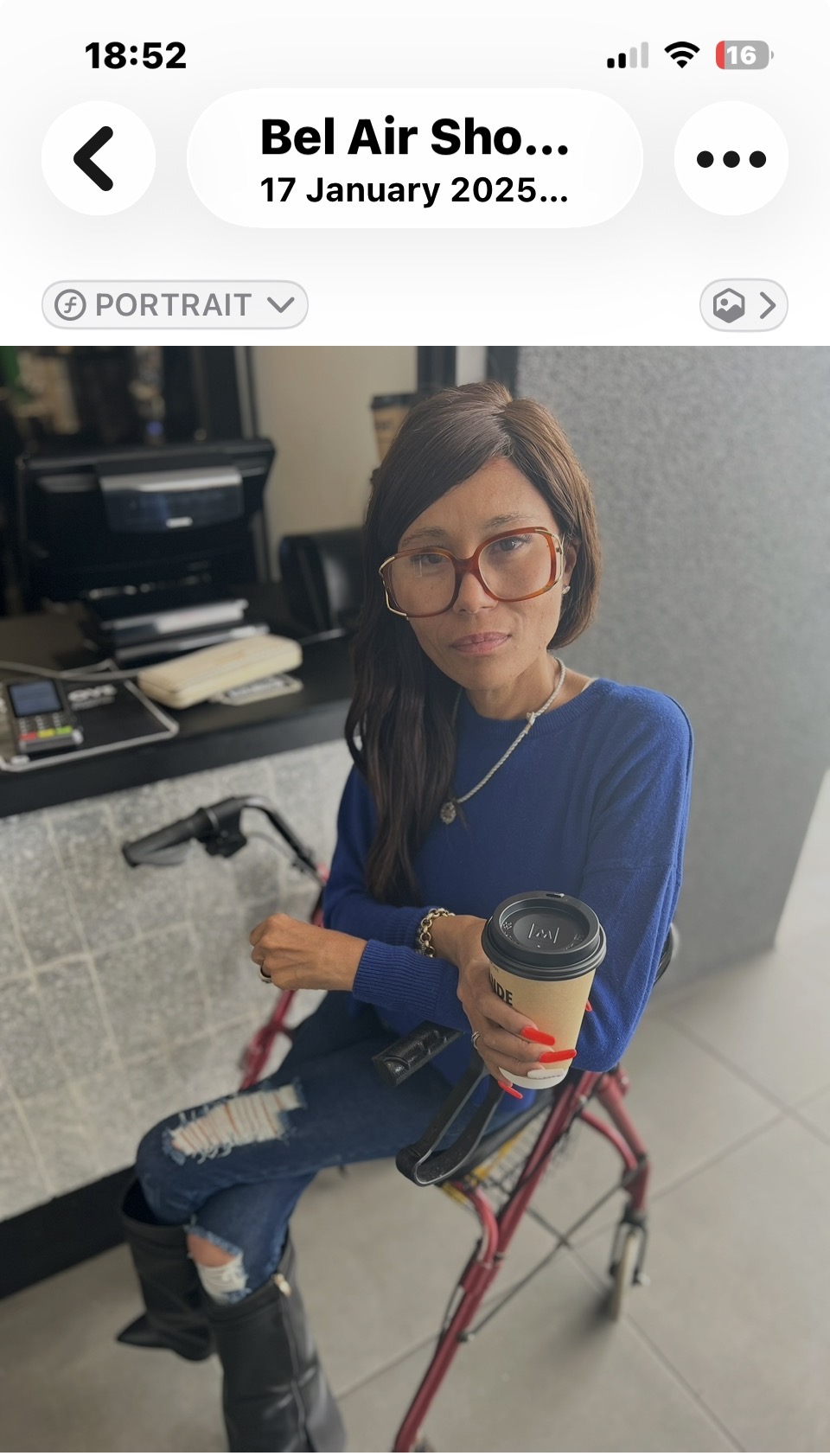
Hauser is playing the Adagio in the background as I type this. I look at the sad girl in that first picture and I feel her — trying so hard to keep it together. She looks so broken. So small. Sitting on her walker, holding a grande cappuccino like it was the only warm thing in the room, feeling completely defeated.
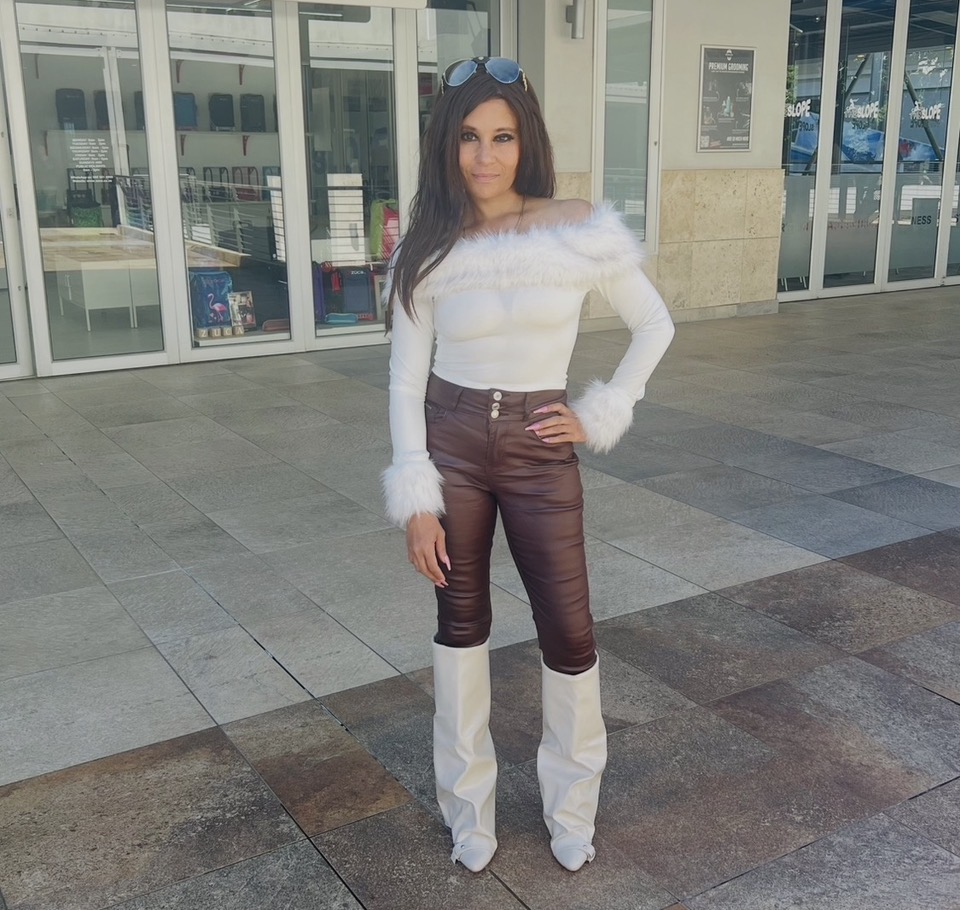
But even then — even then — she was stubborn. Hoping for some way to get better. And, look. The transformation is here for everyone to see. But just because I can walk now, dance for a bit even, does not mean that I am healed.
Back then, that poor little framed me was aching inside. People would stare as if I was a tragedy. I felt like the proverbial pimple on your nose the morning of an amazing date. People would push past me, hang over me. My walk was so unbalanced. The steps I took were tiny. I was so scared of falling. I felt like the loneliest person in the world.
Now people stop and stare for a different reason.
I get told I am beautiful at every turn. It's pleasant — and there is still something sad and broken in the me trying to reclaim my life. One step at a time. I walk to encourage myself to never go back to the littlest woman sitting on a walker at my young age. I still have so much life to live, and I am determined to have fun while I am at it. I now live for me.
Before
The Azure Window, Gozo — and the girl in the aviators.
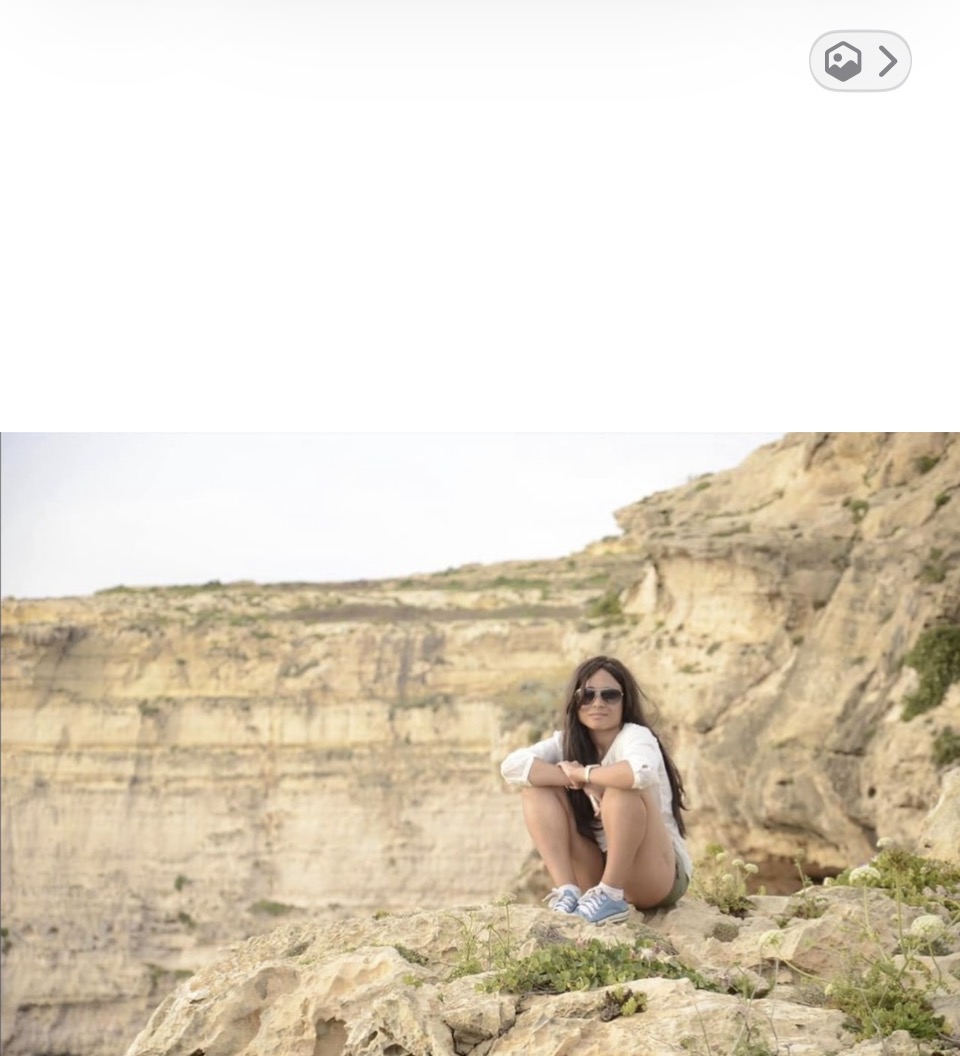
This is my favourite picture of me — sitting on the cliff at the Azure Window on Gozo Island. Sadly, the window is no more. But the aviators are fierce, and so was she.
I keep this photograph close because it is proof. Proof that I have lived, and travelled, and sat on the edge of something ancient with the wind in my hair. FND took a lot — it did not take that afternoon.
The window is gone. The girl is still here.
The quiet truth
The lies we tell ourselves.
"I'm fine."
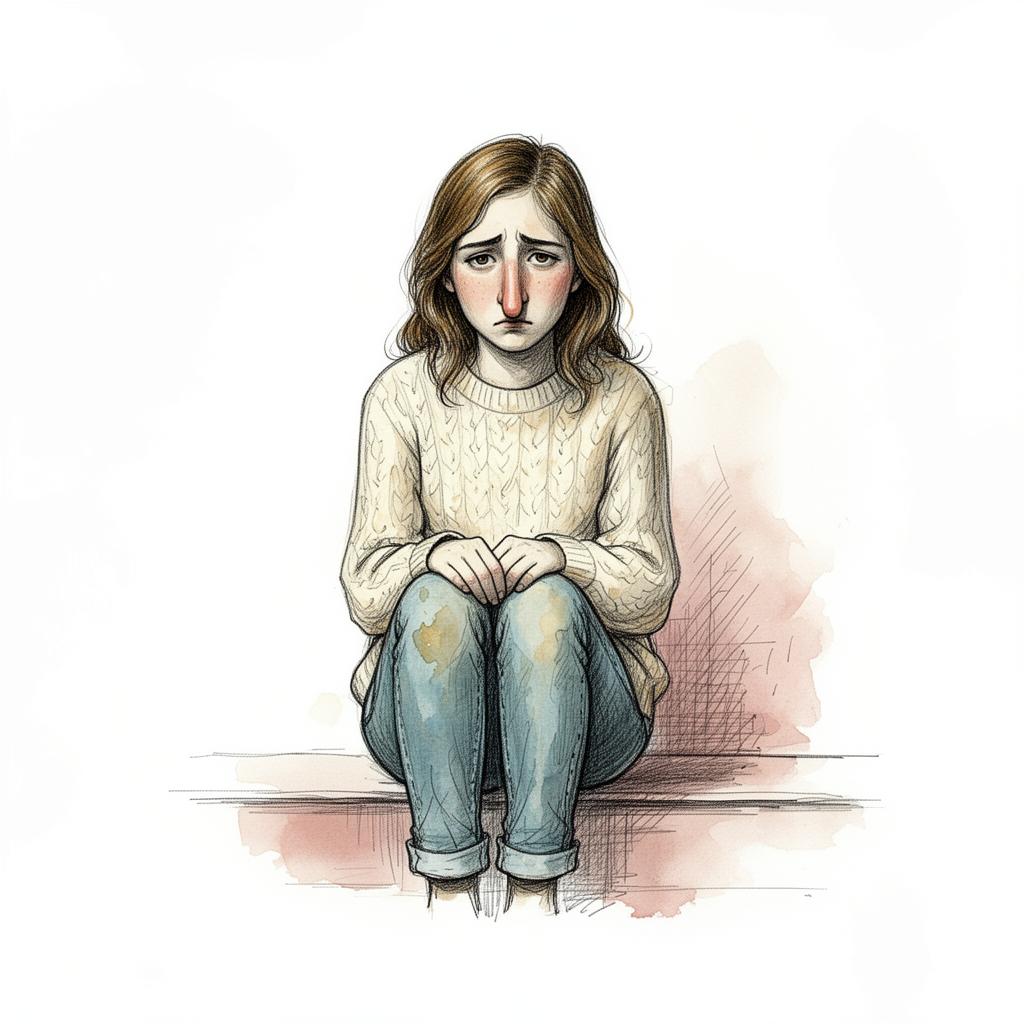
You say it to yourself. You say it to others. You shield your loved ones from just how bad the pain is, just how tired you are. You even say it to the plethora of doctors you see — because until you are diagnosed, no one believes you anyway.
FND is an ever-evolving disorder, and so few gastrointestinal specialists know about it. I had my gallbladder removed. My vagus nerve crushed my stomach. It couldn't be possible how nauseous I was — the vomiting had to be purging, they said, rather than be believed. The dangerous part is what happens next: you start to believe the lies that others tell you.
So much thanks to my psychiatrist, my neuro-psychologist, my occupational therapist, my physio team. If it weren't for my team, I would have been killed by misdiagnosis. So many who live with chronic illness live an unfathomed existence — the trick is to defy everyone, to live, not merely to exist.
A note to anyone still saying it
If "I'm fine" is the sentence you reach for most — please find one person, one specialist, one friend, and tell them the longer version. The truth is heavier to carry alone than it is to share.
The quiet losses
Things I grieve because of chronic illness.
Grief isn't only for people we've lost. It lives in the small, daily things a body used to do without asking. I name them here because naming them is the first kindness.
- Having freedom
- My career
- Friendships
- Feeling rest
- Control over my body
- Use of my hands
- Eating
- Living
- Laughing
I write them down so they don't sit silently in my chest. Some I'm slowly relearning. Some I'm learning to mourn. Both, I think, are part of healing.
A voice that gets it
Sam writes about life with degenerative illness with the kind of honesty that makes the grief feel less lonely. If today is heavy, start here.
@degeneratingsam →The lonely fight
The friendships you lose — and the ones you know you'll never regain.
You can't commit to long-term engagements because you just don't know whether you'll be able to make it that day. Your body may let you down, one more time, and then comes the disappointment, the pressure, the guilt you harbour. No one without a chronic illness will ever fully understand.
You may never get to the appointment. And when you do, you can't commit to stay for the duration of the event. The unknowns outweigh the knowns.
Fighting to find who you once were is lonely. It is a walk only you can do, by yourself. What people don't see is the fight — the struggle to find agency.
Nothing is more humiliating, especially when you have thrived so much, and now you can't even remember how to spell your name at the best of times.
The wheel of change turns so slowly. Your self-belief ebbs and flows. You have to play the long game. Even short-term goals you set for yourself can fly out of the door, never to return.
The unhappiness is overwhelming.
"The unknowns outweigh the knowns. So you learn to live with both — and to forgive yourself for the days the body wins."
14 July 2026 · before dawn
1:30 am, a dead hand, and the enemy called Google.
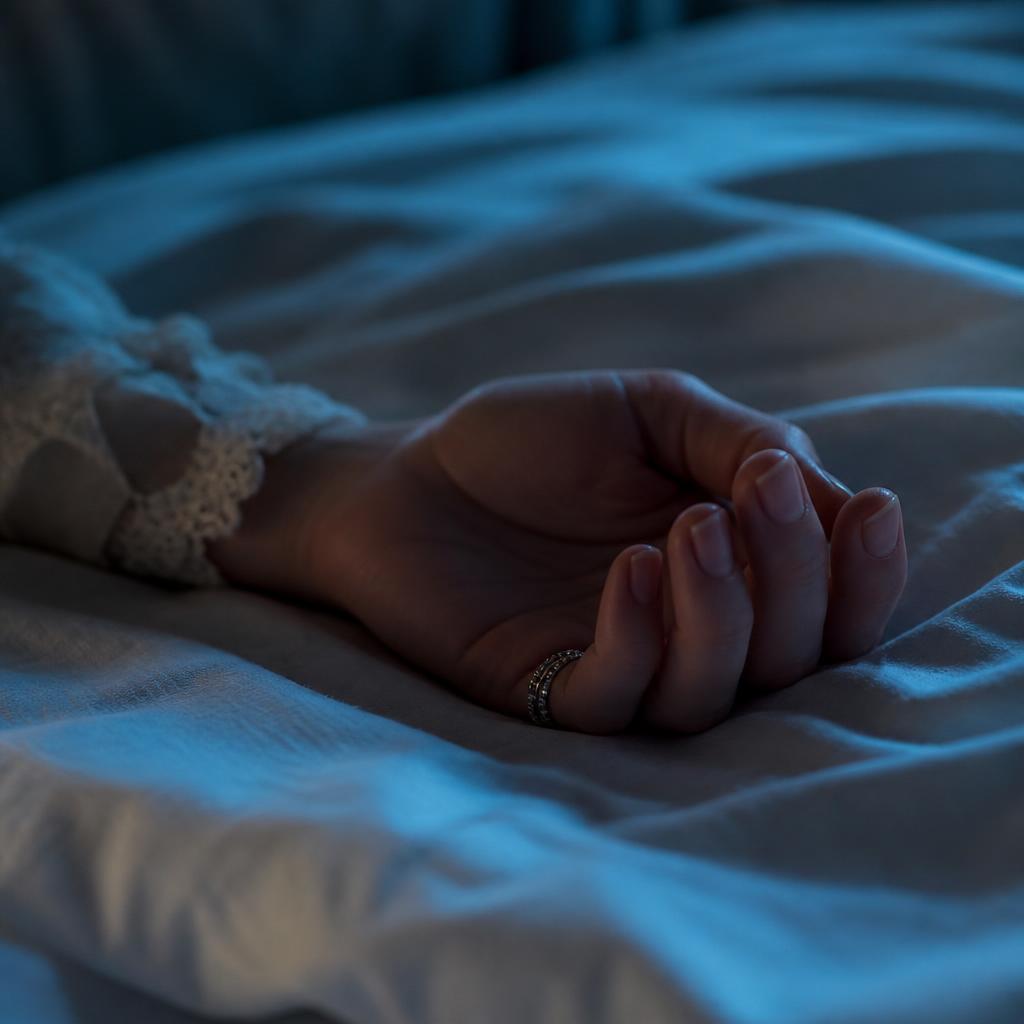
I woke up at 1:30 am and my hand was gone. Not numb in the usual pins-and-needles way — completely dead, ice cold, as if it belonged to someone else. And of course it was my left arm, which made everything feel louder.
I called my mother in absolute tears, sobbing so hard I could barely get the words out. We did what you should never do at that hour: we googled. When you have a chronic illness, googling your symptoms is not your friend. It is not even a friend of a friend. It is the enemy. It will convince you that you are dying in seven different languages before the page has even finished loading.
We debated for a good half an hour whether I should be rushed to the emergency room. The thing is, when all you've done is be in hospital for four years, the last thing you want is to go back. Especially if you have to explain what FND is and watch the eyes of doctors and nurses glaze over because they have no clue what you're saying.
Going to a hospital where no one understands your illness, with FND, could end you. It could trigger symptoms you didn't invite, or kick the ones already present into overdrive. I have been meds-vac'd from so many hospitals to the best hospital in the country, where I was diagnosed and where my team works — but they don't take emergency cases. You have to fight for a bed there. Luckily, my team is incredible and I have been well taken care of.
No disrespect to any other hospitals or their doctors. FND is complex, multi-factorial, and still being researched. It is not something that is easily taught or diagnosed. Suffice it to say, I didn't go to the emergency room. I dug my heels in and decided to wait out the pain and hopefully sleep.
Rest, proper rest, is the panacea for FND. It is a comfort blanket for the brain and body, allowing them to realign. If I'm honest, I fear my brain. It is no joke — it will kick my butt seven ways to Sunday if I do not keep on top of my medication, exercise, and rest.
"I'm still breathing, I'm still here, and while that is the case, I believe that I should live — and live well."
14 July 2026 · The strut
Bury me in my heels.
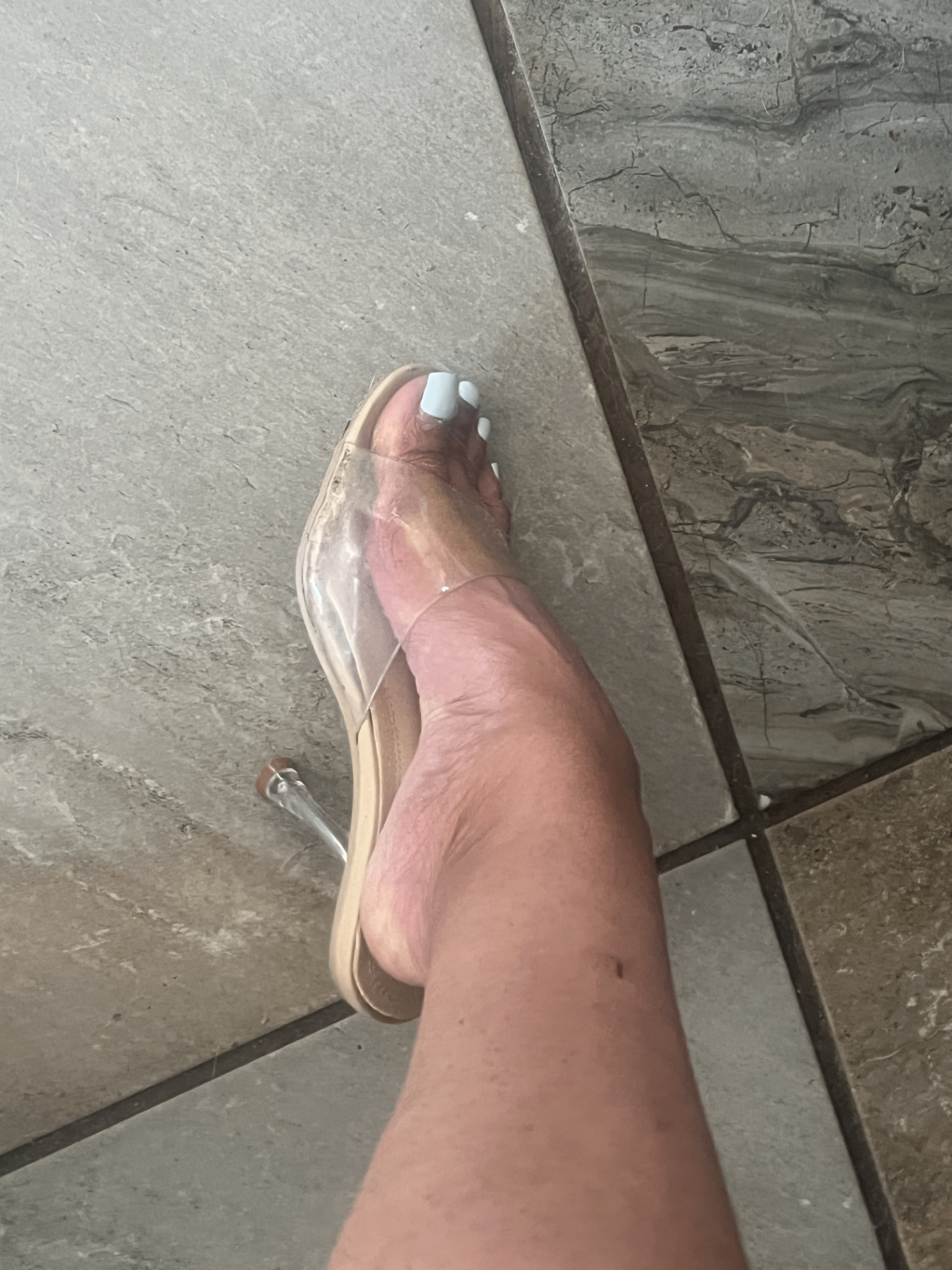
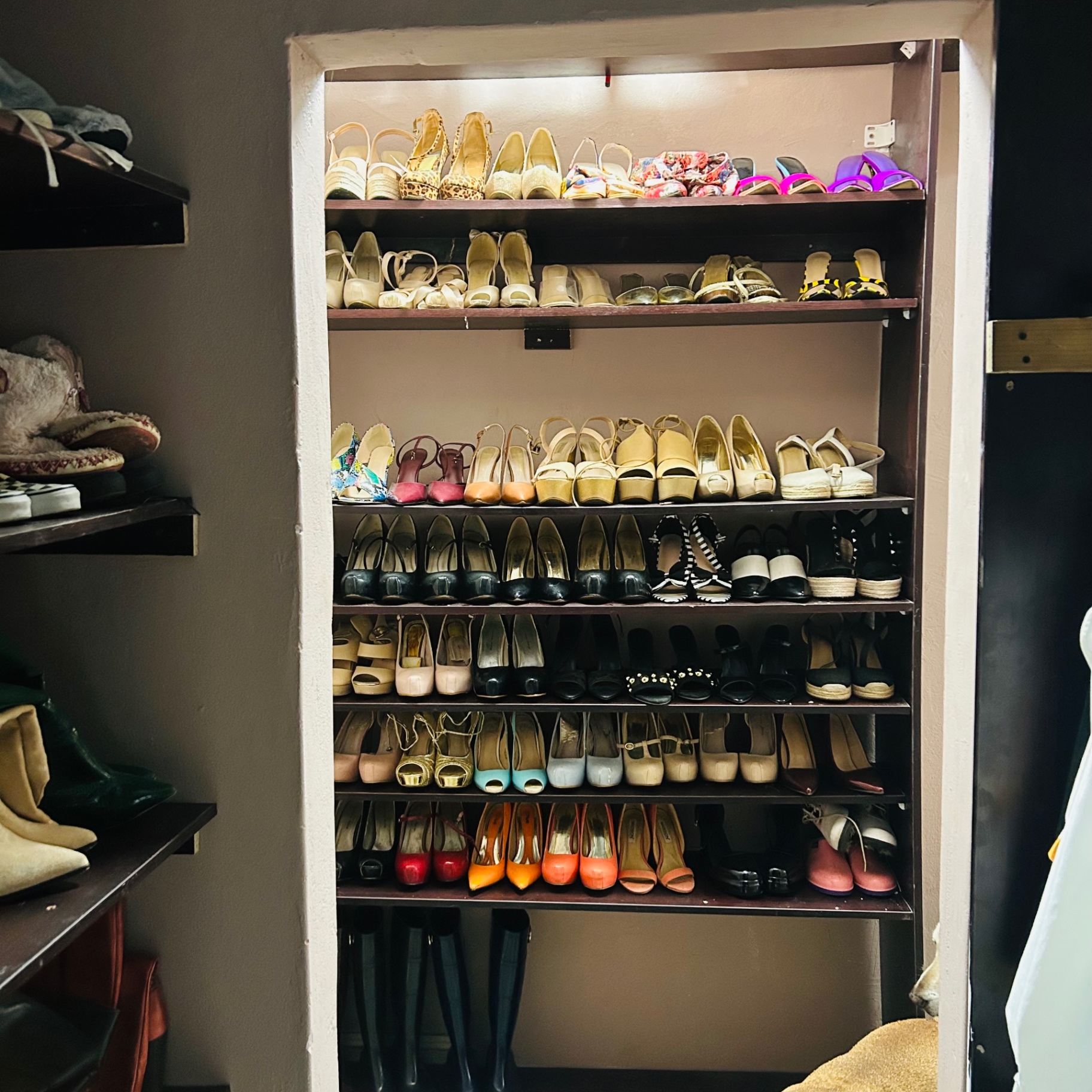
This is what happens to my feet all day, every day, the moment I sit down. Imagine your foot constantly in spasm — the tendon pulled taut, the arch locked — and then the pain and that intense, unrelenting pull travels up into my calf. It means, essentially, that my entire life — walking, sitting, standing still — is excruciating.
And none of this stops me from walking in heels. I want to be buried in my heels. My shoe cupboard is a thing of joy and beauty to me. I am so proud of it. I spend more on my shoes than on anything else, really.
I remember watching my mom walk in heels when I was young — that click, that carriage, that certainty. Strutting is my favourite thing to do in the whole world. But behind the strut is a woman in agony.
The agony is not my story. I refuse. I decide on my storyline. I write the essence of what people see. If I break down when I get home — that is just fine for me. That part belongs to me.
"Behind the strut is a woman in agony. But the agony is not my story — I decide on my storyline."
21 July 2026 · The invisible riot
Bone-tired, low, and the hits keep coming.
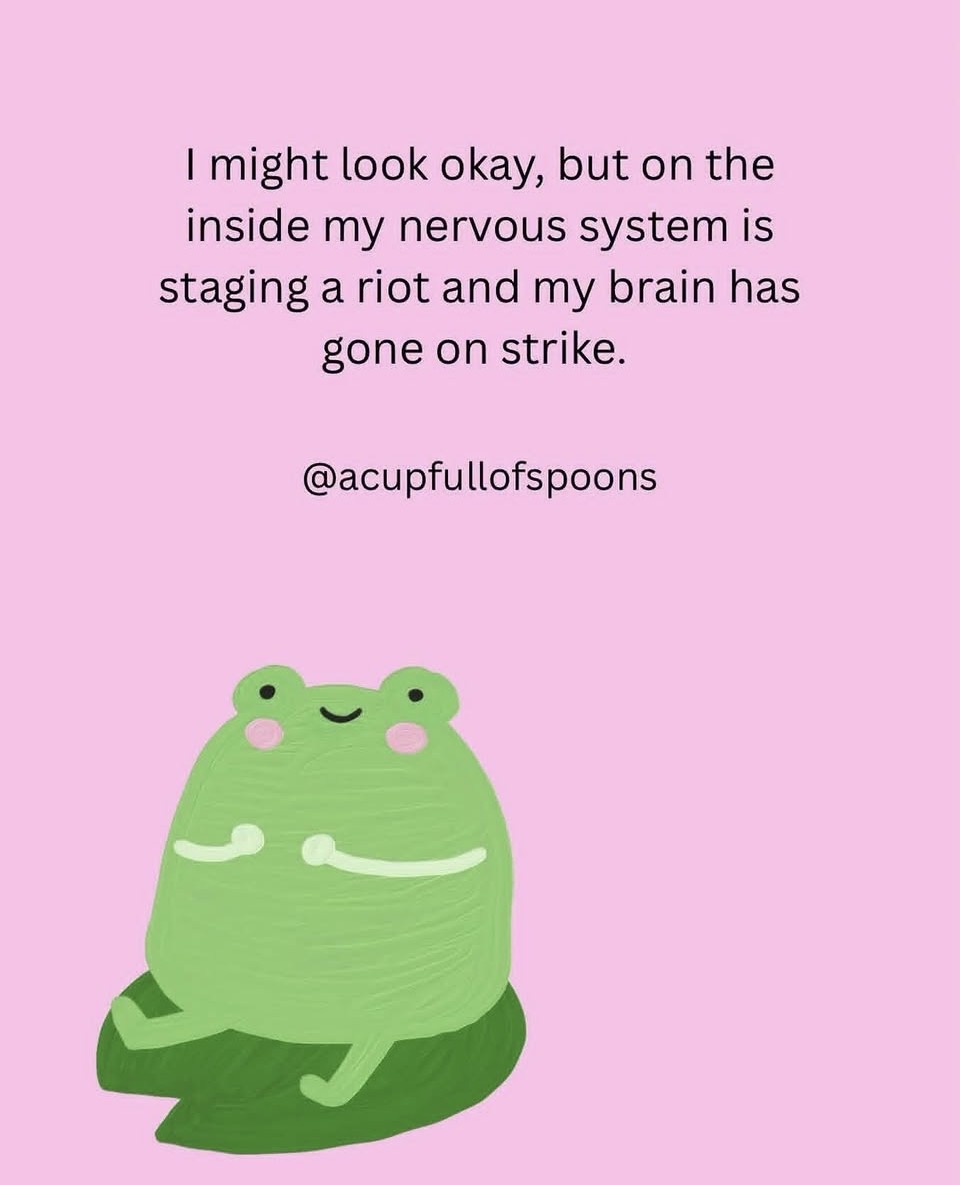
This is how I feel all day, every day. It is not fair to feel this low, and the hits just keep on coming. Today I am very tired. Very low. Bone-tired in a way that sleep doesn't touch.
I might look okay — I can dress up, I can walk, I can smile for a photograph — but on the inside my nervous system is staging a riot and my brain has gone on strike. That is the part nobody sees. That is the part that is hardest to explain.
I am endlessly grateful for accounts like @millionsmissingvoices and @acupfullofspoons who keep posting content that is informative, validating, and deeply needed. When your own words fail, someone else's art can say it for you.
If you are feeling this too: you are not lazy, you are not dramatic, and you are not alone. Some days the bravest thing you can do is simply keep showing up.
"I might look okay, but on the inside my nervous system is staging a riot and my brain has gone on strike."
The daily fight
Count me out at your peril.
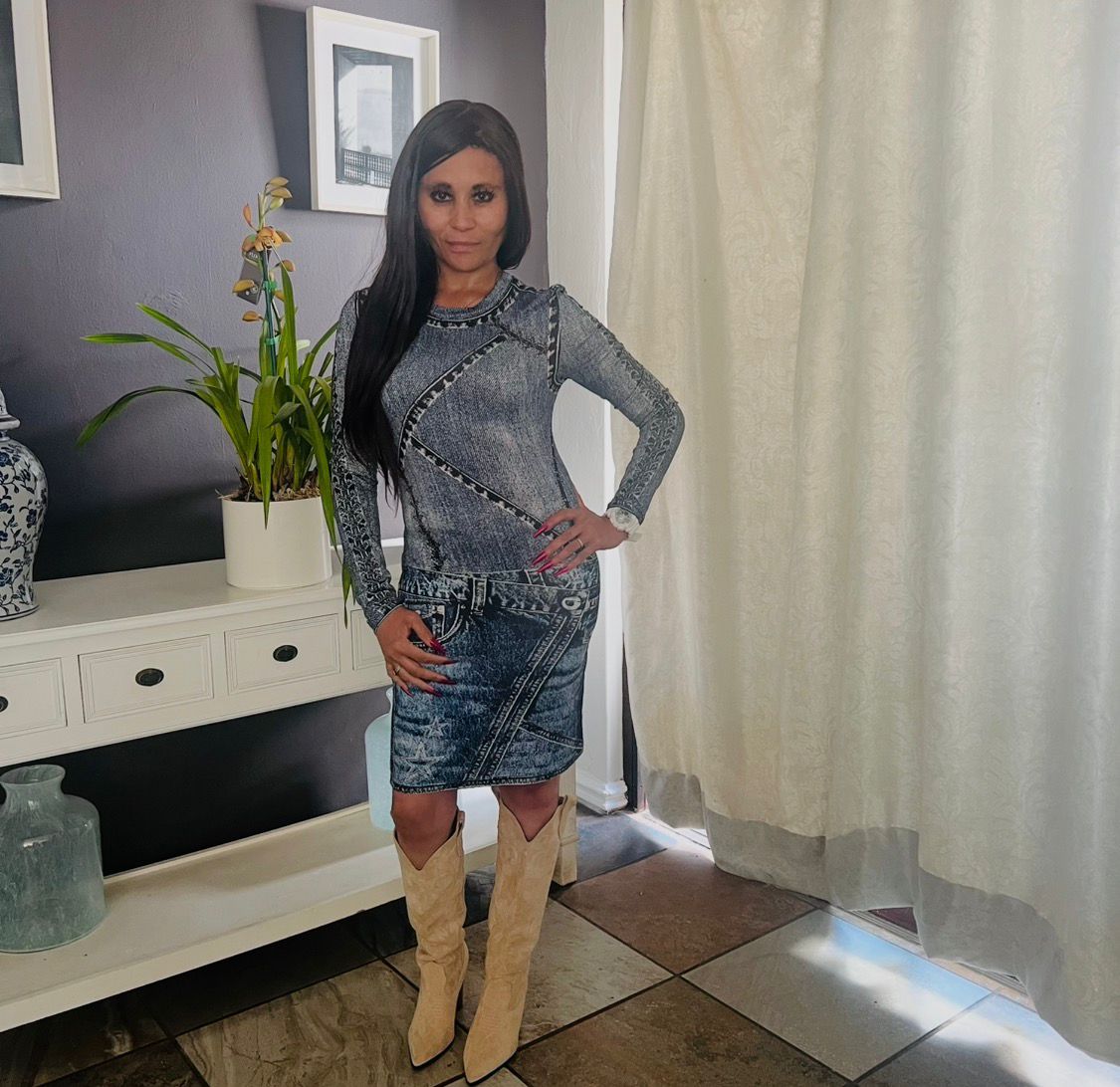
Finding the strength to overcome — that is a daily dedication. The daily grind and push to do the things that healthy people take for granted. One thing I know for sure: you cannot do this without an incredible mindset and the will to do the impossible every day.
People see me walking. Walking in heels, no less. They see me dressing up and doing my makeup, and from the outside it is a mirage. The truth is that on the inside there is a raging bull — a person thirsting for the life they once had, wishing for it, praying for it, begging for it.
But looking back is lovely, and it will trip you up. It will be the reason you cry and beg for forgiveness for sins you never committed, in the hope that the nasty dream that is your reality would be just that — a dream. But it's not.
Without healthy relationships and an outlet to pour out your heart to a neutral person who can guide you, you feel less like a fighter and more like a burden. If truth be told, fighting is all there is to do. Because if you stop, you will regress. You will deplete your journey.
FND will not kill you physically, but mentally it will kick you in the gut, punch you in the throat, and ask you to thank it for the pleasure. FND is a narcissist. It will mentally collapse you if you let it.
My stubbornness, my team, and those who love me will drive me forward — catapult me into the future I can still have. The story is a little different now, but it is a story of inspiration, of someone who, with admiration, gives it her all.
Count me out, at your peril. FND is not my story; my fight is.
I am strong in will and in mind. I will breathe through the pain and fight like crazy to make myself proud every day.
24 August 2026 · Read with me
Diary of an Invisible Wound — a book I am buying.
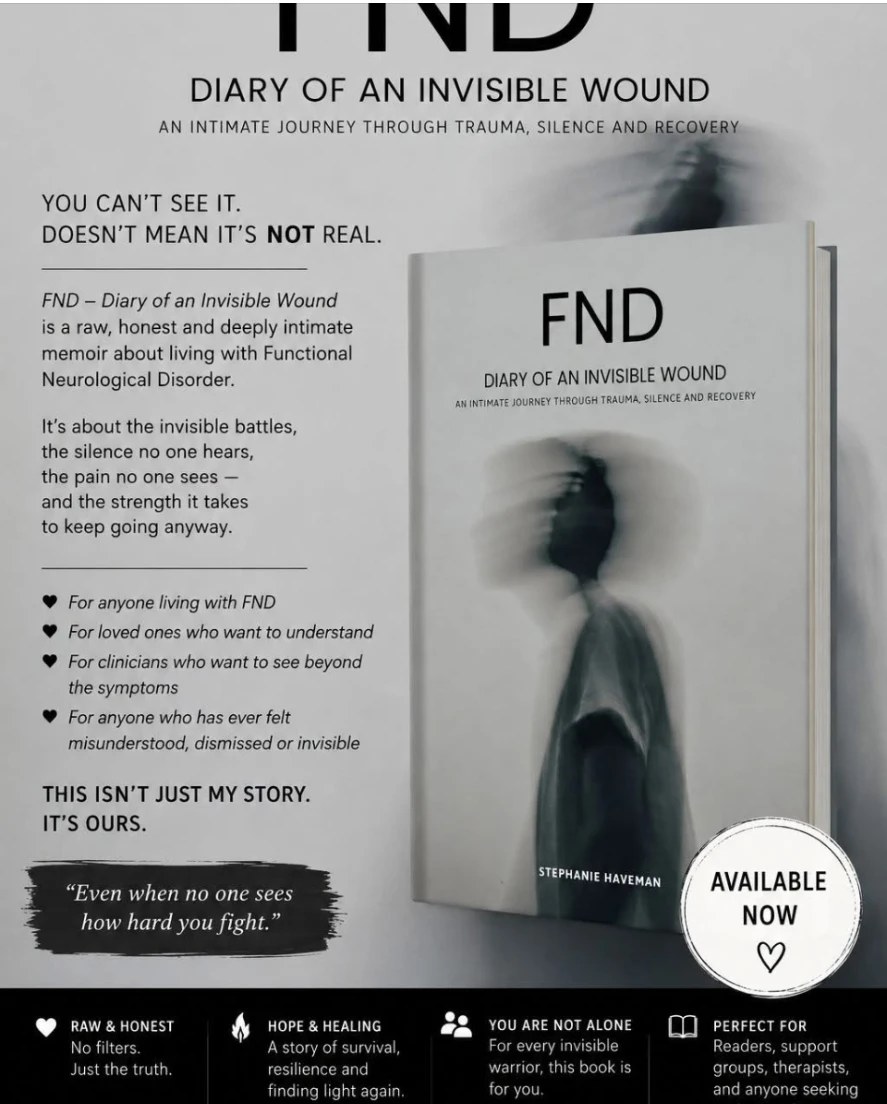
I came across Stephanie Haveman's memoir, FND — Diary of an Invisible Wound: An Intimate Journey Through Trauma, Silence and Recovery. The line on the cover stopped me cold: you can't see it, doesn't mean it's not real.
I am going to purchase it. Not only to read it, but to stand behind it. It is written for anyone living with FND, for the people who love us and want to understand, for the clinicians who want to see beyond the symptoms, and for anyone who has ever felt dismissed, misunderstood or invisible.
The more we know, and the more we love and support one another, the stronger our message: we are not alone. We are not facing this terrible disorder alone.
This isn't just her story. It's ours. If you would like to read it too: find the book here.
Share your story
FND Connect — you are not alone.
You can tell your own story, or connect with people who truly understand FND, on FND Connect. The UK is at the forefront of shining a light on this disorder, and I love that there are places dedicated to making sure no one has to navigate it in silence.
Whether you are newly diagnosed, years into the journey, or supporting someone you love, being able to read real experiences and share your own is powerful. Community is part of the medicine.
You are not alone. I promise you that.
FND Connect is a wonderful source for information, stories, and connection. If you have ever felt like the only person in the world living with these symptoms, spend a few minutes reading the stories there. It may be the reminder you need that what you are experiencing is real, and that hope and solidarity exist.
Visit FND ConnectOne inch at a time
I fight hard every day to praise the person I've become.
The former life I had is not the finish line — it is the direction. I look forward. I keep moving forward. Not because the symptoms have vanished, but because I have learned to carry them with pride.
— Cass
If you're in the early chapters of this — you are not imagining it, you are not alone, and you are allowed to take up space. Sending love. — Cass