For company
Ciabatta
A slow overnight biga, a wet dough handled gently, and a hot steamy oven — blistered crust, open airy crumb, and the only bread worth putting under peri-peri chicken livers.
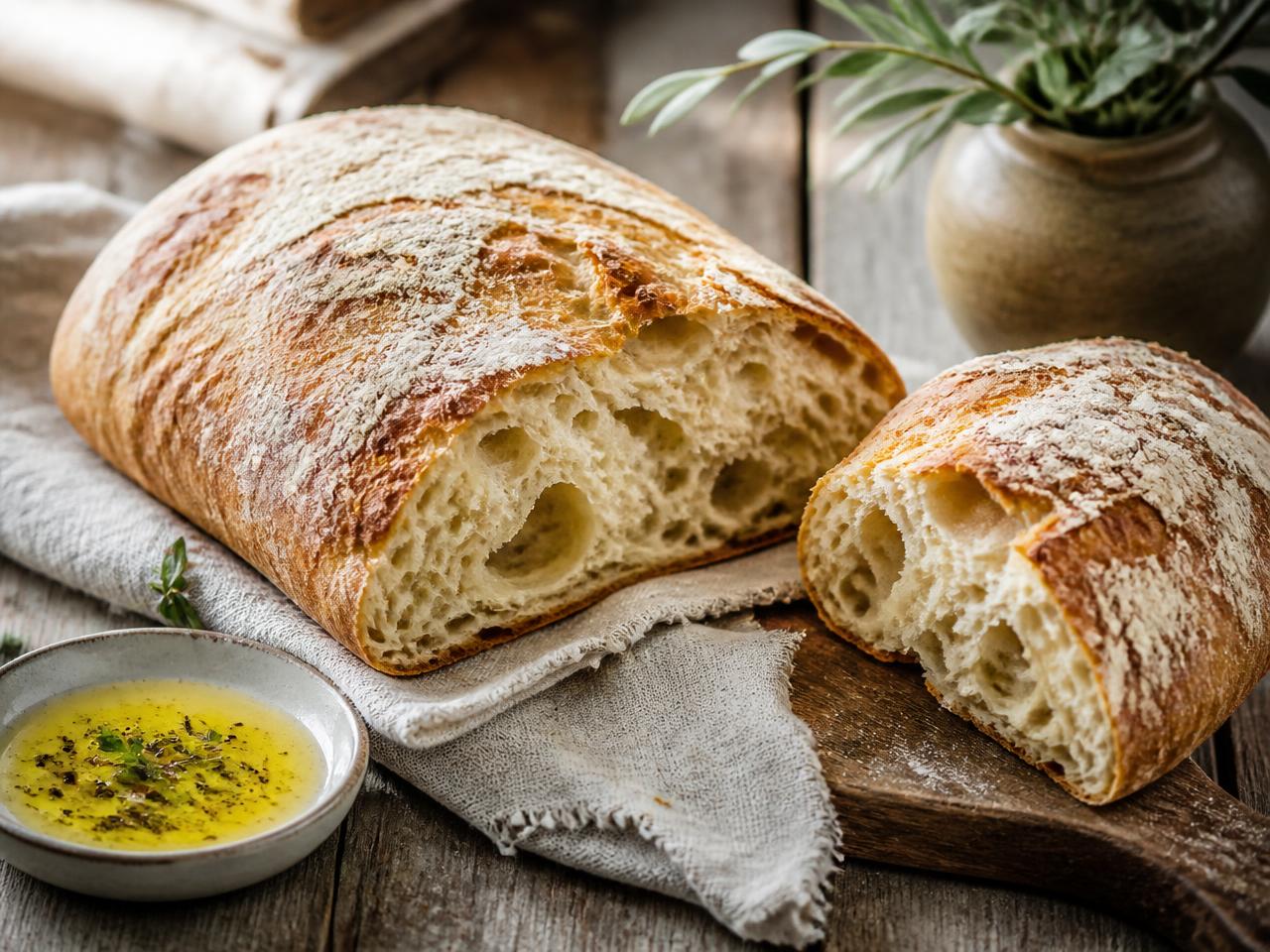
The dough is meant to be slack and sticky. Resist adding flour — that wetness is exactly what gives you the big irregular holes.
Method
- 01
The night before, mix the biga ingredients into a shaggy, sticky dough. Cover and leave at room temperature for 12–16 hours, until bubbly, domed and smelling faintly sour.
- 02
The next day, put the biga, flour, water and yeast into a mixer with a dough hook and mix on low for 3 minutes until it comes together.
- 03
Add the salt and olive oil and mix on medium for 8–10 minutes. The dough will be very wet and slack — it should pull away from the sides in strands but still cling to the bottom. Do not add extra flour.
- 04
Scrape into a well-oiled bowl, cover, and leave to rise for 1½–2 hours, giving it a gentle stretch-and-fold every 30 minutes for the first hour. It should roughly triple.
- 05
Dust a work surface generously with flour and tip the dough out without knocking the air out of it. Handle it as little as you can.
- 06
Cut it into two long rectangles with a dough scraper, gently stretch each into a slipper shape, and lift onto a well-floured cloth or baking sheet. Dimple the tops with floured fingers.
- 07
Cover loosely and prove for 45 minutes to 1 hour, until puffy and wobbling.
- 08
Meanwhile heat the oven to 240°C with a baking stone or heavy tray inside, and a roasting tin on the bottom shelf.
- 09
Slide the loaves onto the hot stone, pour a cup of boiling water into the roasting tin for steam, and shut the door quickly.
- 10
Bake for 20–25 minutes, until deep golden with a blistered crust and hollow-sounding underneath.
- 11
Cool on a rack for at least 20 minutes before cutting — the crumb is still setting.
Keep cooking